
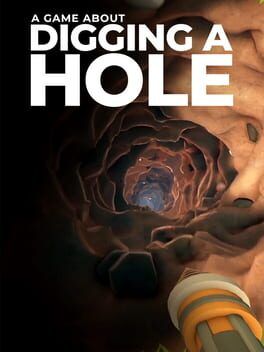

A look at how A Game About Digging A Hole’s tiny shovel-core joke became a viral hit, why it fits perfectly into the current appetite for short, memeable Game Pass experiences, and how it stacks up against other “joke games” that accidentally found real staying power.
A Game About Digging A Hole does not pretend to be anything other than what it says on the tin. You move into a house, walk into your yard, pick up a shovel and start digging straight down. There is no grand opening cinematic and no lore dump. The title card might as well be a shrug. Yet this is the game that quietly racked up well over a million players on PC, more than a hundred million short‑form video views, and now finds itself headlining an Xbox Game Pass wave alongside far bigger, louder releases.
That journey from throwaway gag to subscription staple says a lot about where games, and game discovery, sit in 2025.
Built in three weeks, tuned for two hours
Part of the appeal is how starkly finite A Game About Digging A Hole is. The core experience is tuned to last around two hours. In that time you will learn the entire language of the game. You dig, you find rocks, minerals and the occasional oddity, you sell them in the garage, you buy upgrades and you go back down. The hole gets deeper, your toolset broader, and the mystery at the bottom a little more tantalising.
There are upgrades, but they are few and all of them matter. A better shovel changes how quickly you churn through the dirt. A bigger backpack redefines your rhythm between the pit and the surface. A stronger jetpack lets you thread your way back through the cavern you have carved. Batteries and lamps make the depths less oppressive. There is no filler or branching skill tree to agonise over, just a handful of sliders that keep nudging the pace forward.
Crucially, the hole has been tuned so that by the time you hit its bottom you have likely seen the entire upgrade path. There is no post‑game grind or late‑game treadmill. The curve rises, resolves and ends. For a social‑media era that runs on two‑minute clips and “I finished this in one sitting” anecdotes, that kind of self‑contained arc is exactly the right length.
A perfect short‑form spectacle
If you scroll back to the PC launch window, it is clear the game was built for, and then amplified by, short‑form video. The premise is the hook: a deadpan title card, a character standing in a perfectly ordinary backyard, then an abrupt hard cut to a yawning pit that stretches far outside the frame. The unanswered question of what sits at the bottom is the engine that powers TikTok stitches, YouTube Shorts compilations and stream highlight reels.
The visuals help. The art is clear, legible and chunky enough that it survives compression and phone screens. The moment‑to‑moment gameplay has a hypnotic rhythm that reads cleanly even without commentary. You do not need context to understand what is happening. You are watching someone keep digging. Every cut that reveals a deeper, stranger layer pays off the preceding thirty seconds of shovelling.
This is why clips of A Game About Digging A Hole travel so well out of context. Viewers see the surface, the descent, the first weird artefact uncovered in the dirt. They do not need to understand the control scheme or the upgrade menu. The fantasy is clear in a glance and the punchline sits just out of view. For streamers and short‑form creators that blend of immediacy and tease is ideal content.
The Game Pass sweet spot
On PC, the game already sat in the “why not” price bracket. On Game Pass it becomes even more frictionless. A short, strange, self‑contained experience is exactly what many subscribers are hunting for between tentpole releases. It is the game you download while the next 100‑hour epic is still installing, or the curiosity you try because your friends will not stop posting clips of it in the group chat.
Game Pass has quietly evolved its own internal tiers of experiences. There are the prestige single‑player campaigns, the multiplayer staples and the evergreen service games. Sitting alongside them is a growing run of small, grab‑bag curios that people will sample purely because they are there. A Game About Digging A Hole fits perfectly into that last category, but it does something more than just fill a slot. It understands that being a subscription curiosity also means being instantly readable and nearly disposable.
You do not need to commit to a skill tree or internalise a suite of systems just to see what the fuss is about. The game has no elaborate onboarding. Within seconds of hitting Start you are making meaningful progress, and ten minutes later you have already had a few “oh” moments that feel like you have seen the point. That low commitment bar is essential in a catalogue where hundreds of other games are two button presses away.
At the same time, the act of digging has enough texture and feedback that the game invites you to stay. That tension between immediate comprehension and subtle compulsion is where many of the recent Game Pass darlings live. You can see it in other short, meme‑ready titles on the service that pitch a single joke up front and then quietly expand on it just enough to feel like a real game rather than a one‑note bit.
From joke to genre
A Game About Digging A Hole sits in a lineage of what could be called joke games, projects that present themselves as a single silly idea and then accidentally discover they have real legs. “Press a button to make a number go up” clickers, physics sandboxes with screaming goats, deliberately clunky surgery sims and banana‑clicking idle games all arrived as winks to the audience. Many of them wound up with sequels, console ports and years‑long communities.
The common pattern is that the joke is the on‑ramp, not the destination. Goat Simulator did not stick around because the goat ragdolls were funny, but because the systems underneath allowed for emergent slapstick. Superhot’s gimmick line about time moving only when you move concealed a razor sharp puzzle‑shooter. A Game About Digging A Hole follows the same path. The title is a gag. The act of digging is a toy. The upgrade economy and level tuning are where it quietly becomes an actual game.
Compared to some of its peers it is modest. There are no meta narrative tricks or hidden alternate genres waiting three hours in. Instead it leans into being soothingly linear. That restraint is part of why it found an audience. The game never betrays the promise it makes at the store page. You really are just digging. The surprise lies in how satisfying that can feel when the friction has been sanded away.
This clarity also protects it from the fatigue that sometimes hits more overtly ironic projects. Where some joke games escalate their absurdity until nothing has weight, the hole simply keeps going down. The further you descend, the more the surrounding noise of internet humour drops away and it becomes a simple question of how far you personally are willing to see this through.
A reflection of how we play now
The rise of A Game About Digging A Hole ties into a broader shift in how people make time for games. With so many live service titles demanding daily check‑ins and longform epics vying for attention, smaller experiences that can be fully understood and completed in a single evening feel increasingly precious. They are palate cleansers between seasons, travel‑night companions on handhelds, the thing you boot up when you have ninety minutes and no appetite for a tutorial.
Social platforms reward games that front‑load their concept and payoff, and subscription services reward games that respect the player’s time. A Game About Digging A Hole sits at the intersection of those incentives. It is algorithm‑friendly and player‑friendly at the same time. It shows its whole hand early but still feels like it is worth seeing through to the end.
There is also a kind of comfort in its mundanity. In a market obsessed with escalating stakes and vast open worlds, digging a hole in your own backyard is about as low concept as you can get. The stakes never really change, yet the game manages to make that small act feel like an adventure. There is no destiny to fulfill, just a patch of grass to ruin.
What its success signals for indies
For small teams looking at this story from the outside, A Game About Digging A Hole can be read as both inspiration and warning. It proves that a simple, tightly executed idea can still cut through the noise if it is sharable, legible and respectful of the player’s time. It also shows how quickly success in this space can spawn clones and burn through audience attention.
Mobile stores have already filled with games hoping to catch some of its search traffic. More “do one thing” projects will no doubt follow it onto PC and console, some earnest, some cynical. The ones that will stick are likely to follow the same pattern the original does. They will take a joke premise and quietly shore it up with thoughtful pacing, friction‑free UX and a clear sense of when to end.
On Game Pass specifically, A Game About Digging A Hole points toward a future where more of these hyper focused, meme‑ready experiences sit alongside the blockbusters as part of the value pitch. Not every subscription headliner needs to be a sprawling RPG. Sometimes all it takes is a backyard, a shovel and the promise that, if you have a spare evening, you can see what waits at the bottom.