

Former Sony Interactive Entertainment America president Shawn Layden says Sony’s real innovation would be a $300 PS5, not a $1,200 PS6. Here’s how that argument hits console pricing, late-generation strategy, and players weighing an upgrade.
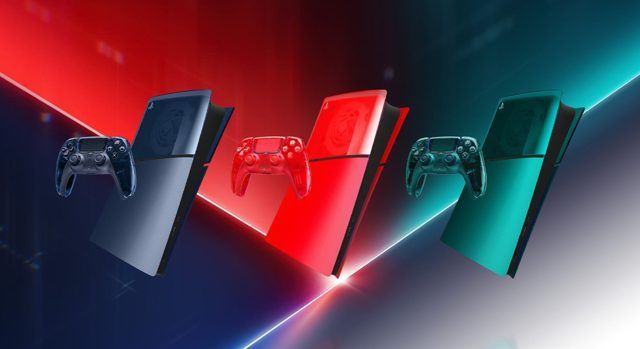
Image: in.ign.com
Layden’s $300 PS5 argument lands because PS5 pricing broke the old console rhythm
Former Sony Interactive Entertainment America president and CEO Shawn Layden has put a sharp price tag on the next PlayStation debate: in his view, Sony should be trying to make “another PS5 for $300,” rather than chasing a “PS6 for $1,200.” The comments came on The Trophy Room podcast and were reported by IGN, Push Square, GamingBolt, Dexerto, and others.
The tension is simple. Console generations have usually become cheaper as they mature. Layden pointed to the PS2 falling to $99 late in its life, while arguing that the PS5 is the first PlayStation platform he has seen go up in price over time. IGN’s reporting gives that claim its current bite: the PS5 launched in 2020 at $499 for the disc-drive model and $399 for the Digital Edition, while IGN says Sony’s direct pricing now lists the base PS5 at $649, the Digital Edition at $599, and the PS5 Pro at $899.
Sony has attributed recent hardware price increases to “continued pressures in the global economic landscape,” according to IGN’s coverage of the company’s earlier pricing announcements. Layden’s argument is not a statement of Sony policy, and it is not a leak about a new SKU. It is a former executive challenging the industry’s default next-gen instinct at a moment when the old bargain of console hardware, better tech at falling prices, looks less reliable than it used to.
The PS6 price is still unannounced, but the anxiety is already shaping the conversation
Sony has not announced the PS6’s specifications, release date, or price in the provided source material. That matters because the $1,200 figure in Layden’s quote is his framing of the risk, not an official PS6 price. Push Square describes the next PlayStation as likely to be costly, while Dexerto says reports have predicted next-gen consoles around $1,000. Those are expectations and reports, not confirmed retail information.
Still, the anxiety is grounded in visible market behavior. The PS5 did not follow the classic late-cycle discount curve. If a six-year-old platform can become more expensive for new buyers, players have reason to wonder whether the next model starts from an even higher baseline. IGN also notes that retailer behavior can make the pain worse, citing GameStop and third-party reseller pricing around PS5 Pro availability.
For a strategy read, Layden is attacking the weakest point in Sony console strategy right now: not brand demand, but accessibility. A premium PS6 may satisfy early adopters and enthusiasts who want the newest ray tracing, image reconstruction, or performance features. A $300 PS5 would aim at a broader late-cycle audience that has been waiting for the normal price drop that never really arrived.
The hardware question has shifted from power to perceptible value
Layden’s most important claim is not only about price. It is about diminishing returns. Push Square reports him saying that older console transitions tended to bring something “mind-blowing,” while the PS4-to-PS5 shift was sold largely through ray tracing and teraflops. IGN and Dexerto both quote his line that further technical differences can become “differences only dogs can hear.”
That is an argument about player perception, not a technical teardown. The PS5 is plainly more capable than the PS4, and the source material does not dispute that. Layden’s point is that Sony may struggle to sell another expensive hardware jump if the headline improvements sound incremental to most buyers. According to Push Square and Dexerto, he said, “I think we have enough power in the machine,” and argued that the silicon and operating system are already enough to build the kinds of games players want.
This is where a $300 PS5 becomes an innovation argument rather than a simple discount request. In a late generation, the strategic gain may come from reducing friction: a smaller box, lower bill of materials, easier entry into the PlayStation ecosystem, and a larger audience for the same software base. For players, that value is easier to understand than a spec sheet promising another round of ray tracing gains.
A cheaper PS5 would extend the generation, but it would also complicate Sony’s upgrade ladder
Layden’s proposal would effectively stretch the PS5 generation. GamingBolt frames the idea as sticking with PS5 longer until PS6 can retail at a lower price point, and Push Square reports Layden saying Sony should “make it smaller, make it cheaper” rather than iterate the console again. That is a direct challenge to the usual six-to-eight-year platform runway he referenced in the same discussion.
The strategic upside is obvious: a lower entry price could bring in players who skipped the PS5 because the launch window was supply-constrained, because the price never fell, or because the Pro model pushed the top of the stack higher. A $300 PS5 would also preserve the existing software audience, which matters for publishers deciding how long to support the platform.
The tradeoff is that a cheaper PS5 could make a PS6 harder to position. If Sony sells the current generation as powerful enough, the next generation needs a clearer reason to exist than higher numbers. That could be new form factor ideas, services, backward compatibility improvements, performance standards, or software experiences that cannot scale back cleanly. None of those are confirmed in the provided sources. The only confirmed piece is that Layden believes cost reduction would be the more meaningful innovation right now.
For players waiting on PS6, the practical advice is to treat every price claim as provisional
Anyone deciding whether to buy a PS5 now or wait for PS6 should separate three categories. Confirmed: Layden made the $300 PS5 versus $1,200 PS6 argument publicly, and current PS5 pricing is higher than launch pricing according to IGN’s comparison of Sony’s direct prices. Also confirmed from the same reports: Sony has not announced PS6 pricing, specs, or a release date in the material provided.
Reported but unconfirmed: next-gen console pricing could approach or exceed $1,000, as outlets such as Dexerto and Push Square discuss through reports and predictions. Rumored or speculative: platform features such as handheld components, which Dexerto describes as rumor, and specific PS6 technical directions beyond general expectations around improved power and graphics features.
The buyer’s read is therefore cautious. If you want a PlayStation now and the current price fits your budget, the sources do not provide evidence of an imminent $300 PS5. If you are waiting because you expect the PS6 to be affordable at launch, the current hardware market gives no guarantee. Layden’s comments are useful because they identify the pressure point, but they do not reveal Sony’s roadmap.
Sony’s late-generation problem is no longer only selling the next box
The larger signal is that PlayStation’s next hardware decision may be judged as much by economic design as by technical design. A powerful PS6 would be normal console evolution. A genuinely low-cost PS5 revision would be a different kind of move, one focused on rebuilding the entry-level promise that helped past PlayStation systems expand late in their lives.
That does not mean Sony will follow Layden’s advice. Push Square says Sony is moving ahead with next-gen plans, while the source material overall treats PS6 development and pricing as subjects of reporting, expectation, and rumor rather than confirmed launch details. Sony’s incentives are also mixed: premium hardware can protect margins in a tough component market, while lower prices can grow the audience for games, subscriptions, accessories, and digital purchases.
Layden’s argument cuts through that spreadsheet problem with a player-facing question: is the next PlayStation leap valuable enough if it arrives at a price many households cannot justify? Until Sony answers with official PS6 details or a real PS5 price cut, the $300 PS5 idea will remain less a product prediction than a benchmark for whether console strategy can still make late-generation hardware feel accessible.