
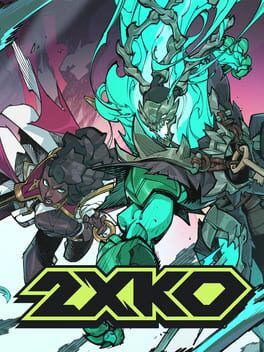

Riot co-founder Marc Merrill said 2XKO needed monthly active users in the high hundreds of thousands, if not millions, to sustain its live-service model. That target shows the pressure on Riot’s fighting game strategy and the economics facing competitive 2D fighters.
Image: IGDB
2XKO’s survival target was far above normal fighting game gravity
Riot Games’ 2XKO would have needed monthly active users “in the high hundreds of thousands, if not millions” to support its intended live-service model, Riot co-founder, co-chairman, and chief product officer Marc Merrill said on The Lemonade Stand podcast, according to GamesIndustry.biz and IGN.
That is the hard number at the center of the 2XKO Riot story. Merrill said the game resonated with some players, but the audience was “not nearly enough” to justify the live-service, long-tail structure Riot had built around it. GamesIndustry.biz also reported that 2XKO ended active development in August because it cost “substantially more to operate than it [brought] in” and engagement stayed relatively flat despite larger updates.
For fighting game players, the tension is obvious. A tag fighter can win tournaments, produce highlight reels, and satisfy lab monsters while still missing a corporate sustain line by a mile. The genre’s competitive intensity does not automatically translate into a 2XKO player count big enough to feed a large service operation every month.
Merrill’s comments put Riot’s fighting game strategy under pressure because they make the internal bet clearer: 2XKO was not being measured like a boxed fighting game with seasonal DLC alone. It was being measured like a Riot-scale free-to-play ecosystem.
The live-service model needed constant bodies, not occasional bracket hype
Riot’s official 2XKO site describes the game as a free-to-play 2v2 tag-team fighter available now on PC, Xbox Series X|S, and PlayStation 5. The page highlights duo play, League of Legends and Arcane champions, ranked ladder, lobbies, fuses, competitive integrity, and in-game purchases. That package points to a game designed for constant return visits rather than a one-time purchase spike.
That design changes the economics. A traditional fighting game can sell copies, DLC characters, costume packs, and tournament visibility into a smaller but dedicated base. A free-to-play live service has to cover ongoing costs through engagement and spending. The match has to keep loading, the ladder has to stay populated, cosmetics have to convert, and updates have to pull players back without breaking competitive trust.
Merrill’s “high hundreds of thousands, if not millions” monthly active user comment shows the size of the gap Riot was trying to cross. That figure is not the same as concurrent players, and it is not limited to Steam. Monthly active users count anyone who returns during the month, so the pool can be much larger than a visible concurrent chart. Even with that caveat, the target is huge by fighting game standards.
IGN framed the number as “pretty unrealistic for a fighting game” and pointed to Street Fighter 6’s Steam averages as a comparison, while noting that PlayStation numbers are not public. EventHubs similarly argued that hoping for millions of monthly active players was extreme for the genre. Those are outlet interpretations, not Riot’s wording, but they capture the practical read most competitors will recognize: fighting games can have high skill density and low population density at the same time.
Street Fighter 6 changed the matchup Riot thought it was entering
Merrill also cited Street Fighter 6 as a factor in 2XKO’s unsuccessful launch. According to GamesIndustry.biz and IGN, he said Riot had “a window” to help the fighting game community, but Street Fighter 6 arrived roughly eight years after Riot began working on what became 2XKO.
His explanation is not that Capcom alone killed the project. Merrill praised the 2XKO development team and said Riot had already communicated the game to players, so the company chose to keep going and release it to the community. He added that if Riot had launched years before Street Fighter 6, he believed 2XKO would have made a “really significant impact.”
That timing matters because fighting games are extremely sensitive to player routine. Once a ranked ladder becomes a nightly habit, switching costs are real. Players learn matchups, join Discords, find locals, buy controllers, follow tournaments, and build training mode muscle memory. A new Riot fighting game was asking players to learn a tag structure, a League-based roster, and a free-to-play economy while Street Fighter 6 was already serving as the genre’s mainstream anchor.
From a competitive perspective, that is a brutal neutral situation. Riot was not launching into an empty stage. It was trying to take space against the largest current fighting game while also proving that a 2v2 tag format could bring in players beyond the established FGC.
Rising Thunder explains the dream, and the cost structure explains the miss
Merrill traced 2XKO’s premise back to Rising Thunder, the free-to-play fighting game released in alpha in 2015 by Radiant Entertainment. Riot acquired Radiant in 2016, removed Rising Thunder from storefronts, later canceled it, and released it as open source a year after cancellation, according to GamesIndustry.biz.
On the podcast, Merrill described the original concept as taking Rising Thunder’s simple controls and 1v1 fighting game idea, combining it with League of Legends IP and the Cannon brothers, then adding a Riot-style competitive ecosystem. Insider Gaming reported the same account, quoting Merrill’s description of an “easyish to play” fighter with depth and mastery.
That origin explains why 2XKO was always aiming at a difficult target. Rising Thunder’s pitch was accessibility with real competitive structure. League’s champions gave Riot recognizable characters. The Cannon brothers brought deep FGC credibility. A Riot-style ecosystem implied ranked play, events, service support, and competitive scaffolding.
The risk is that each strength adds operating weight. Simple controls can lower the execution gate, but they do not remove the need for matchup knowledge, team construction, assist timing, pressure defense, and netplay reliability. League IP can attract curiosity, but a fighting game still has to keep players through losses that feel personal and immediate. A competitive ecosystem can create prestige, but it requires money, staff, scheduling, anti-cheat work, balance attention, and communication.
Riot’s internal alignment problem may have hurt the game before launch
Merrill said leadership changes created a lack of “alignment on the strategy,” which caused “managerial fracturing,” according to GamesIndustry.biz and IGN. He also said the team received conflicting guidance and concluded, “We’ve got nobody to blame but ourselves.”
That admission is important because it separates 2XKO’s problems from the lazy version of the argument that the FGC simply failed to show up. Merrill’s account points to internal strategy issues as well as market response. If a game is built for one business target, messaged to one audience, and then judged by another scale, the development team can be forced to play defense before the product even reaches stable offense.
Fighting games punish mixed direction. A small change in control philosophy, monetization cadence, roster rollout, assist design, or ranked incentives can shift the audience. Competitive players want stability and depth. New players want onboarding and fast feedback. Free-to-play operators want recurring engagement. Those goals can coexist, but only if the strategy is clean.
The available reporting does not give full budget figures, staffing levels, skin sales, conversion rates, or retention data. Without those numbers, no one outside Riot can calculate the exact break-even point. What is confirmed is Merrill’s stated MAU range, his statement that the audience was not enough, and GamesIndustry.biz’s report that costs exceeded revenue while engagement remained relatively flat despite larger updates.
The current player guidance is simple: you can still play, but expect limits
For players deciding whether to download 2XKO now, the confirmed availability picture is narrower than the business debate. Riot’s official 2XKO site says the game is available now on PC, Xbox Series X|S, and PlayStation 5. GamesIndustry.biz reports that it remains playable and free to download, with servers staying online “beyond 2026.”
There is some timing friction in the source material. GamesIndustry.biz says active development ended in August. Insider Gaming says Riot confirmed in August that 2XKO would cease active development in December 2026, with players receiving all in-game content and refunds. Riot’s own site, meanwhile, still lists Patch Notes 1.3.1 dated September 8, 2026, a Lux update, and an October 1 news post promoting First Attack and Evo France tournaments. Those details should be read as a live, playable service with a sunset or reduced-development plan, not as proof of long-term content growth.
If you want a clean buyer’s guide answer, there is no box price to weigh because Riot lists 2XKO as free to play. The real cost is time. If you are interested in League champions as tag fighters, duo play, or studying how Riot translated MOBA characters into a 2D ruleset, the download still has value while servers remain online. If you want a game with years of guaranteed new characters, cosmetics, and evolving ranked support, the public reporting gives reason to wait for clearer Riot communication before investing heavily.
The broader lesson for 2XKO live service expectations is harsher. A fighting game can have smart assists, strong art, accessible inputs, and real competitive intent, then still fail the business check if the MAU target belongs to a much larger service category. Riot tried to build a fighting game at Riot scale. Merrill’s comments suggest the game’s competitive design was never the only match it had to win.