
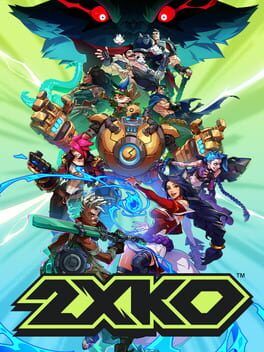
A preview of Riot Games’ free-to-play fighter 2XKO ahead of its January 20, 2026 PS5 launch, covering its 2v2 tag system, League of Legends roster, rollback netcode, F2P plans, and its chances in a scene ruled by Street Fighter, Tekken, and Guilty Gear.
Riot Games has finally nailed down a console date for 2XKO, its long-in-development League of Legends based fighter. Barring delays, the game is now set to hit PS5 on 20 January 2026, with Xbox Series X|S and PC releases lining up alongside it. After months of PC testing, it is about to step fully into a fighting game landscape currently dominated by Street Fighter 6, Tekken 8, and Guilty Gear Strive.
2XKO is built around fast, explosive 2v2 tag combat. You select a point character and an assist partner, then swap on the fly to extend combos, escape pressure, or set up brutal mixups. Instead of being a traditional Marvel-style chaos fest where assists simply fly in and out, Riot is leaning on longer screen time for each character. Active tag-ins, tag supers, and tandem pressure sequences make both partners feel like co-stars rather than background support.
The structure should be familiar to anyone who has spent time with tag fighters, but early footage and tests suggest a more grounded pace than something like Marvel vs. Capcom while still keeping the spectacle that Riot’s IP is known for. There is an emphasis on clear visuals and readable hit effects, which is crucial when two League champions are darting across the screen and trading assists in the corner.
Of course, the hook for many will be the roster. 2XKO pulls directly from League of Legends and its wider universe, giving long-time MOBA fans a chance to pilot their favorite champions in a more execution-focused setting. Early builds have showcased mainstays like Ahri, Darius, Jinx, and Yasuo, with designs that split the difference between classic League silhouettes and the sharper, more expressive look of games like Arcane.
Riot appears to be prioritizing recognizable, personality-driven picks that naturally lend themselves to fighting game archetypes. Zoners, rushdown monsters, grapplers, and stance-heavy characters are all represented through familiar champions, which should help on-ramp League players who are used to thinking about these characters in terms of range, mobility, and cooldowns. As the game grows, it would not be surprising to see fan favorites from both Summoner’s Rift and the extended Runeterra universe join the lineup, each tailored to a particular playstyle.
Netcode is a make-or-break feature for any modern fighter, and Riot seems acutely aware of that. 2XKO is being built with rollback netcode and cross-platform play in mind, leveraging Riot’s substantial infrastructure from League and Valorant. The goal is to allow PS5, Xbox, and PC players to share lobbies and ranked queues with minimal input delay, which is essential for a game that will live or die on its online health.
Beyond the netcode itself, Riot has been experimenting with features that fighting game fans have come to expect, such as training tools that allow for recording and playback, detailed frame data, and robust matchmaking filters so players can tune their experience. If these systems make it cleanly to the January 2026 console launch, 2XKO could immediately stand shoulder to shoulder with the current genre leaders on a technical level.
Perhaps the most notable angle for 2XKO is its free-to-play model. Riot is approaching this in a way that mirrors its other live-service hits, aiming to keep the core fighting mechanics and competitive integrity accessible to everyone while monetizing cosmetics and long-term progression. The expectation is that the full base roster will be earnable through in-game currency or direct purchase, with seasonal battle passes and skin lines providing ongoing revenue.
Fighting games often struggle to maintain big player counts beyond launch due to their upfront cost and niche appeal. By removing the paywall and dropping 2XKO into a free-to-play ecosystem that already works for League and Valorant, Riot is betting that curious newcomers will at least try the game and maybe stick around. As long as any monetization steers clear of direct power advantages and focuses on cosmetics or side modes, the competitive community is likely to embrace the model.
The launch timing means 2XKO is stepping into a particularly busy period on PS5, with multiple free-to-play titles hitting the platform in January 2026. Yet the real competition for mindshare comes from within the fighting game genre itself. Street Fighter 6, Tekken 8, and Guilty Gear Strive have established strong player bases, ongoing DLC roadmaps, and entrenched positions in the tournament circuit.
Where 2XKO might carve out its own place is in accessibility and brand recognition. League of Legends remains one of the biggest names in gaming, and there is a built-in audience of millions already familiar with its characters. If Riot successfully translates those champions into easy-to-pick-up, hard-to-master tag fighters and pairs them with polished online systems, it can lower the barrier to entry for players who have always watched Evo, but never bought a stick.
At the same time, tag games naturally create hype moments. Long combo routes, clutch 2v1 comebacks, and coordinated synergy between partners all play extremely well on streams and in arenas. Esports is in Riot’s DNA, and 2XKO is poised to be structured with tournament play in mind from the outset, with spectator tools and TO-friendly features likely to follow the company’s usual pattern.
The question is not whether 2XKO can coexist with Street Fighter, Tekken, and Guilty Gear, but what role it will fill. It could become the go-to “spectator-friendly” tag fighter for newcomers, the crossover gateway for League fans into the wider FGC, or even a full-fledged mainstay on the competitive circuit if the mechanics prove deep enough. With its January 20, 2026 PS5 release now in sight, the pieces are in place. All that remains is for Riot to stick the landing on roster depth, online performance, and a fair free-to-play system that keeps players fighting long after launch.