
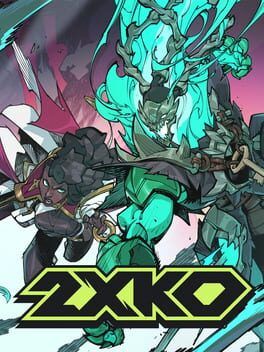

Marc Merrill says 2XKO was not a mistake, even as Riot ends active development in December 2026. Here is the long-term case Riot is making and what fighting game fans should watch next.
Image: IGDB
Riot is ending active development, but Merrill refuses the “mistake” label
The hardest fact in the 2XKO story is no longer up for debate: Riot Games announced that active development on its League of Legends fighting game will end in December 2026. That puts Marc “Tryndamere” Merrill’s new PAX West comments in a tense position. Asked by Kind of Funny’s Greg Miller how Riot should talk about 2XKO when discussing mistakes, the Riot co-founder, co-chairman, and chief product officer pushed back directly.
“I wouldn’t characterize 2XKO as a mistake,” Merrill said, according to PCGamesN’s report on the interview. His defense was not that the game reached the scale Riot wanted. He acknowledged the opposite. Merrill said 2XKO did not get enough “critical mass” to become sustainable in the long term, while also arguing that Riot delivered a “beautiful” game that “took risks with the tag system.”
That is the core tension for anyone following 2XKO now. Riot is stepping away from active development, yet one of the company’s most senior executives is still framing the project as a serious attempt to serve the fighting game community rather than a failed detour. For players, the distinction matters because it separates the quality of the game from the business threshold Riot needed it to clear.
Merrill’s defense starts with the Cannons and the FGC problem Riot wanted to solve
Merrill’s answer leaned heavily on Tom and Tony Cannon, two of the four founders of Evo and central figures in the fighting game community. In the PCGamesN-cited PAX West exchange, Merrill described Riot meeting the Cannon brothers and seeing people who “couldn’t help themselves but want to serve the community.” He said Riot’s question became: if the company could make life better for fighting game players, what would that look like?
That is the cleanest version of Riot’s long-term case for 2XKO. The project was not positioned by Merrill as a simple brand extension for League of Legends. He described a bet on competitive infrastructure, free-to-play access, the League IP, and a tag fighter that could appeal to both League players and existing FGC players. In fighting game terms, Riot was trying to win neutral on several screens at once: accessibility, esports, netcode, recognizable champions, team synergy, and a live-service economy.
The danger is that each of those decisions creates its own execution test. A tag game asks players to learn two characters, assists, routing, defensive layers, and matchup-specific pressure. A free-to-play game asks the studio to keep players returning without making monetization feel hostile. A Riot-scale esports product needs viewership, retention, competitive credibility, and a business model that survives outside launch curiosity. Merrill’s comments do not deny that the route was ambitious. They argue that ambition was the point.
The game could be good and still miss Riot’s live-service bar
The strongest criticism around 2XKO has never been that nobody saw promise in it. Esports Insider reported that Riot’s August 20 announcement said “a lot of you” played 2XKO, but not enough to make the current development model sustainable. The same report says Riot planned a final run of content, improvements, and champions, with all champions unlocked and cosmetics available through a bundle. Esports Insider also summarized Riot’s position as acknowledging that continuing active development “as we are today” had become impossible.
That tracks with Merrill’s explanation. He pointed to the free-to-play and live-service market as a brutally crowded attention fight, noting that more than 20,000 games launch on Steam every year and that games also compete with social media and YouTube. His claim was not that 2XKO lacked merit. It was that a live-service game has to get enough things right at once to build a durable community.
From a competitive player’s perspective, that is painfully believable. A fighting game can have sharp movement, strong rollback, expressive offense, and still lose population if matchmaking slows down, roster cadence feels thin, ranked goals dry up, or casual players bounce off the first real knowledge check. Esports Insider’s piece, drawing on community discussion and interviews with FGC figures Corey “Nitten” Salva and Hieu “hieule8” Van Le, framed the frustration as Riot having expectations that were too high for a niche fighting title. That is interpretation from that outlet and its sources, but it fits the visible contradiction: the game had advocates, yet Riot says the numbers were not enough.
2XKO’s design risk was real, especially for a free-to-play audience
Merrill singled out the tag system as one of 2XKO’s risks, and that is worth taking seriously rather than treating it as a marketing phrase. Public descriptions of 2XKO identify it as a 2v2 tag-team fighter set in Runeterra, with players selecting two champions, switching between point and assist roles, and using systems such as handshake tags, assists, pushblock, parry, supers, and customizable Fuse options. In plain match language, 2XKO asked players to manage layered offense, defensive timing, team construction, and conversion theory from the start.
That can be exactly what FGC lifers want. Tag games create explosive routing, lab monster creativity, and strong spectator moments when a player turns one assist call into a corner carry and a dead character. They also create a steep onboarding tax. If a new player loses to layered assist pressure before understanding when to pushblock, parry, challenge, or simply block, the game has to work extremely hard to keep that player in training mode instead of losing them to another free game.
Riot’s free-to-play argument made sense on paper. Lowering the purchase barrier should help a fighting game avoid the classic problem where the player pool shrinks after launch weekend. But free entry does not erase the genre’s learning curve. It may even expose it faster, because a player who paid nothing has less friction when walking away. Merrill’s comments suggest Riot understood the prize, but the December 2026 development cutoff suggests the retention math did not land.
Community reaction is now part of Riot’s wider credibility problem
Eurogamer reported that Merrill also discussed Riot’s in-development MMO during the same PAX West appearance, calling it “the grail” internally and saying “many a brave knight are going to die.” Eurogamer noted that the MMO still has no public name, release window, or confirmed MMO subgenre, and that it restarted development in recent years after earlier leadership changes. The outlet also reported that Merrill has previously said the MMO will be out before 2030, while emphasizing that little else is public.
The reason that matters to 2XKO is trust. Eurogamer collected skeptical online reactions tying 2XKO’s end of active development to doubts about Riot’s ability to stick with future large projects. One X user quoted by Eurogamer asked how players could trust the MMO would remain supported if it did not become enormous quickly. Another argued that 2XKO’s sunsetting created bad optics for Riot’s future games. Those are individual community reactions, not proof of Riot’s plans, but they show the reputational damage that follows a live-service retreat.
Merrill’s answer tries to counter that damage by separating outcome from intent. He said the effort to serve the live FGC was in the hearts of the Cannons, Rioters, and Riot’s leadership, according to PCGamesN. That may matter internally, but players judge support by patches, tournaments, queues, refunds, and whether their time investment feels safe. In the FGC, long-term trust is built like matchup knowledge: slowly, through repeated situations where the answer works.
What 2XKO players should watch before December
For active players, the practical question is not whether Merrill personally believes in the project. It is what remains playable, what gets delivered before December 2026, and what Riot communicates after active development ends. The confirmed signal, through Riot’s announcement as reported by Esports Insider and PCGamesN, is that active development ends at the end of the year while Riot is refunding players and keeping the game live. Esports Insider also reported planned content, improvements, champions, universal champion unlocks, and a cosmetics bundle.
The first thing to watch is Riot’s exact post-December support language. “Keeping the game live” is meaningful, but it is not the same as promising new balance patches, long-term ranked seasons, tournament integration, or indefinite server operation. If Riot clarifies matchmaking, private lobbies, training mode access, ranked maintenance, and server regions, players will have a better basis for deciding whether to keep grinding teams.
The second is the final balance and roster state. A tag fighter’s last major patch can define its community for years if the systems are stable and the top tiers are tolerable. If the final version leaves oppressive assist sequences, weak defensive reward, or a narrow character pool at the top, the remaining scene will feel that immediately. If Riot lands a healthy final build, locals and online brackets have a cleaner shot at survival even without active development.
The third is grassroots momentum. Esports Insider described a passionate 2XKO esports community and noted that the game was fun to watch at Evo, with storylines and rivalries forming. That is the part Riot cannot simply manufacture from a roadmap. If players keep running sets, publishing tech, organizing brackets, and teaching matchups, 2XKO can still have a competitive afterlife. Merrill’s interview makes clear Riot does not want the project remembered as a mistake. The FGC will decide whether it gets remembered as a dropped live service, a good tag fighter that missed its numbers, or both.