

How a shelved Assassin’s Creed follow‑up survived legal battles, returned with a playable prologue, and is finally closing in on release as a supernatural historical action adventure.
Patrice Désilets has been chasing 1666: Amsterdam for nearly a decade and a half. It began life as a spiritual cousin to Assassin’s Creed, was buried in a publisher collapse, locked inside a legal fight with Ubisoft, and then quietly rebuilt at a new studio. Now it has resurfaced as a playable prologue on PC, with Early Access planned for 2026.
For a project that once only existed as leaked prototype footage and courtroom anecdotes, 1666: Amsterdam is finally something you can download, poke at, and start to understand. The big question is whether this strange mix of witchcraft, historical intrigue, and cosmic horror can still live up to a promise first made in the PS3 / 360 era.
From THQ’s great hope to legal hostage
The story of 1666: Amsterdam starts back in 2010–2011, when Désilets left Ubisoft after shipping Assassin’s Creed 2 and Brotherhood and joined THQ Montreal. There, he began work on what internal documents called “the next big open world fantasy” set in the Dutch Golden Age.
When THQ collapsed in 2013, Ubisoft swooped in and bought the Montreal studio and its projects. That included 1666: Amsterdam, but the reunion between Ubisoft and its former star director was short and hostile. Contract talks broke down, Ubisoft fired Désilets, and the new owner shelved his game.
The dispute went public. Court filings described 1666 as a potential “Assassin’s Creed killer,” a phrase that helped turn the game into one of the era’s classic what‑ifs. In 2016 the two sides finally settled, and Désilets walked away with the rights to 1666 but without the THQ‑era codebase.
By that point the project was effectively a ghost. Whatever early work had been done at THQ Montreal was unusable, and the only thing that really survived was the core pitch: a dark historical city, a protagonist moving through crowds and rooftops, and a focus on systemic interaction rather than scripted spectacle.
Rebuilding 1666 at Panache Digital Games
After leaving Ubisoft, Désilets founded Panache Digital Games in Montreal. The studio’s first released project, Ancestors: The Humankind Odyssey, arrived in 2019 and gave a glimpse of his new priorities. Ancestors was systemic, experimental, and occasionally bewildering. It embraced player‑driven discovery more than structured storytelling.
Behind the scenes, though, Panache was slowly resurrecting 1666. According to recent interviews, the studio has spent the last six years reimagining the game from scratch: a smaller team of around 70 developers, no publisher dictating milestones, and an emphasis on iterating playable builds instead of producing vertical‑slice trailers.
That philosophy explains why the game’s comeback at Summer Game Fest 2026 arrived not as a CG teaser, but with a download link. The public’s first real look at 1666 is not a cinematic, but a half‑hour chunk of the game itself.
What the playable prologue actually is
The free prologue on Steam and the Epic Games Store is framed by Panache as an introduction, not a demo chopped out of the middle. It is roughly 30 minutes long if you mainline objectives, built to establish the tone, pacing, and basic systems that will carry into Early Access.
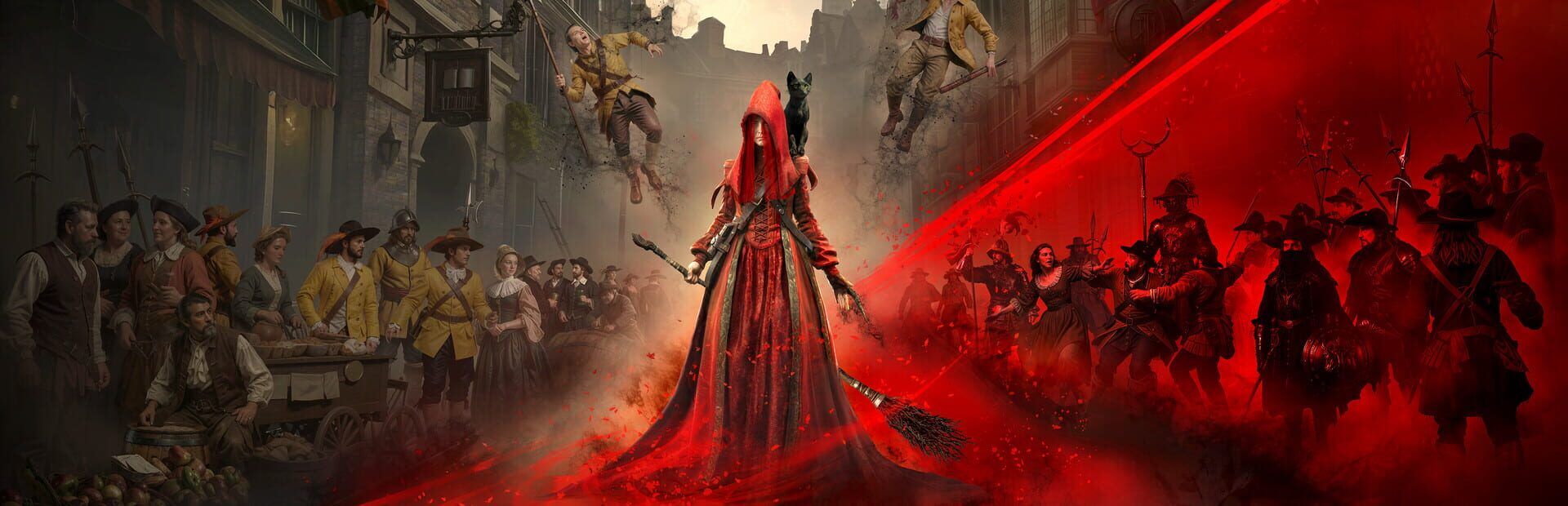
You play as Noa Brooklyn, a young witch and “Collector” in training. The prologue tracks her initiation: a nighttime walk through a cursed Amsterdam, snippets of mentor dialogue, and the first taste of a job description that mostly boils down to hunting things that should not exist in the human world.
There is light combat, but the focus is more on mood and setup. You choose a Companion who will follow you, fight beside you, and react to what you uncover. The prologue pushes you to notice how people move, how shadows behave at the edges of torchlight, how the city itself seems to pulse with something off.
Structurally, it feels closer to the opening chapter of a narrative game than a flashy systems showcase. There are hints of social stealth and traversal, but nothing on the scale of an open world yet. It is an “amuse‑bouche,” as Désilets put it, a small serving intended to prime you for where the full game wants to go.
A supernatural Amsterdam that rewrites history
1666: Amsterdam is pitched as a third‑person, story‑led action adventure where history is the stage for something far stranger than trade disputes and colonial banking. The setting is the Dutch Golden Age, but the fiction asserts that this period’s chaotic energy is tied to hidden forces.
In the game’s lore, inhuman beings called the Originals have been nudging humanity for centuries. They hide in plain sight, wearing human faces and slipping into positions of power. A secretive order, the Zaindaris, and their Collectors exist to identify, catalogue, and, when needed, eliminate these beings.
Noa’s job is to move through the city’s heaving streets and canals and figure out who among the merchants, artists, and priests are actually something else. Daytime is about investigation and observation, picking up patterns, following rumors, pushing conversations without revealing too much. Nighttime is where the supernatural peels back the facade.
The prologue does not unpack the full cosmology, but it does start to blend timelines. A character named Aaron, hinted to originate from 1999 and to perceive the world through a cat, implies that this story is not confined to the 17th century. Modern touches bleed into the folk horror, hinting that 1666 is a nexus point in a much larger conflict.
The result is an Amsterdam that looks historically grounded but behaves like a haunted organism. Crowded taverns become rituals, fog hides things that are not weather, and the city’s wealth and cruelty feel like visible symptoms of something metaphysical rotting underneath.
How it plays: lineage and departures from Assassin’s Creed
On the surface, a third‑person action adventure set in a densely built European city from the Assassin’s Creed co‑creator is always going to invite comparisons. Early footage of the prologue leans into that connection just enough to be familiar: tight‑packed streets, characters slipping into crowds, and a camera that rides close to your character’s shoulders.
But the tone and priorities are different. Instead of parkour as a constant flow state, traversal in the prologue is slower and more deliberate. Encounters are smaller and stranger. Panache is pitching 1666 less as an empire‑spanning historical epic and more as a contained witchcraft thriller, with systems tuned around tension rather than empowerment.
Combat appears weighty, with emphasis on limited resources and supernatural abilities that cost something to use. Social spaces are not just mission hubs. They are pressure cookers where you are quietly reading who might be an Original and what that might cost to confront.
Désilets has also been clear that Early Access will be used to tune those systems in public, not just to plug in missing content. That suggests that pacing, difficulty, and even the shape of missions might evolve based on how players engage with the prologue’s foundations.
Why a prologue and Early Access make sense for this project
After its long and very visible history in limbo, 1666 arrives under a very particular kind of scrutiny. Many players remember it not as a concrete game, but as a symbol of how publisher control can swallow a creator’s vision. For Panache, that mythic status is both marketing gift and weight.
A free prologue helps cut through the myth. It lets people test the feel of Noa’s movement, the rhythm of conversations, the texture of the city, without buying into vaporware. It is also a statement that the studio is more interested in showing work than talking around it.
Early Access, meanwhile, is a practical answer to ambition. Building an intricate city full of overlapping social and supernatural systems is expensive, and Panache is not working with the budget or headcount of a major publisher. An iterative release gives them real data and revenue while they refine how much of Amsterdam they can convincingly simulate.
There is risk here. Story‑heavy games can buckle under Early Access if pacing changes too often or if the narrative arrives in disjointed chunks. But the prologue’s cleaner, chapter‑like format suggests that Panache is thinking of the game as a series of self‑contained arcs that can be individually tested without wrecking the whole.
Can 1666 finally live up to its decade‑old promise?
The version of 1666 that existed in people’s imaginations in 2013 was a very different beast from the project Panache is shipping in 2026. Back then, it was easy to picture a big budget Ubisoft‑scale historical sandbox with every bell and whistle that came with that era’s open worlds.
What the prologue shows instead is something narrower, stranger, and arguably more personal. Noa is not a swaggering assassin figure, but a witch navigating power structures she barely understands. Amsterdam is not a playground of climbing puzzles, but a stage for paranoia. The supernatural is not just flavor. It is the lens through which politics, trade, and religion get recast as manifestations of hidden entities.
Whether that will satisfy those who spent years dreaming about “the Assassin’s Creed killer” depends on what they were really hungry for. If what you wanted was another globe‑trotting collectible spree, 1666 might feel small. If you were more interested in the systemic, historically textured stealth fantasy that the first Assassin’s Creed hinted at but never fully became, this direction might actually fit better.
Crucially, the prologue proves that 1666 is real, playable, and conceptually coherent. The city feels lived in, the occult angle gives it identity, and the interplay between history and horror feels like something only this team would make. The game still has to survive the long road of Early Access and the expectations built up over 15 years, but for the first time its success depends on design decisions, not contract disputes.
After so much time as a legal footnote and a leaked prototype, 1666: Amsterdam is finally doing the only thing that can redeem its legend. It is letting players in.