
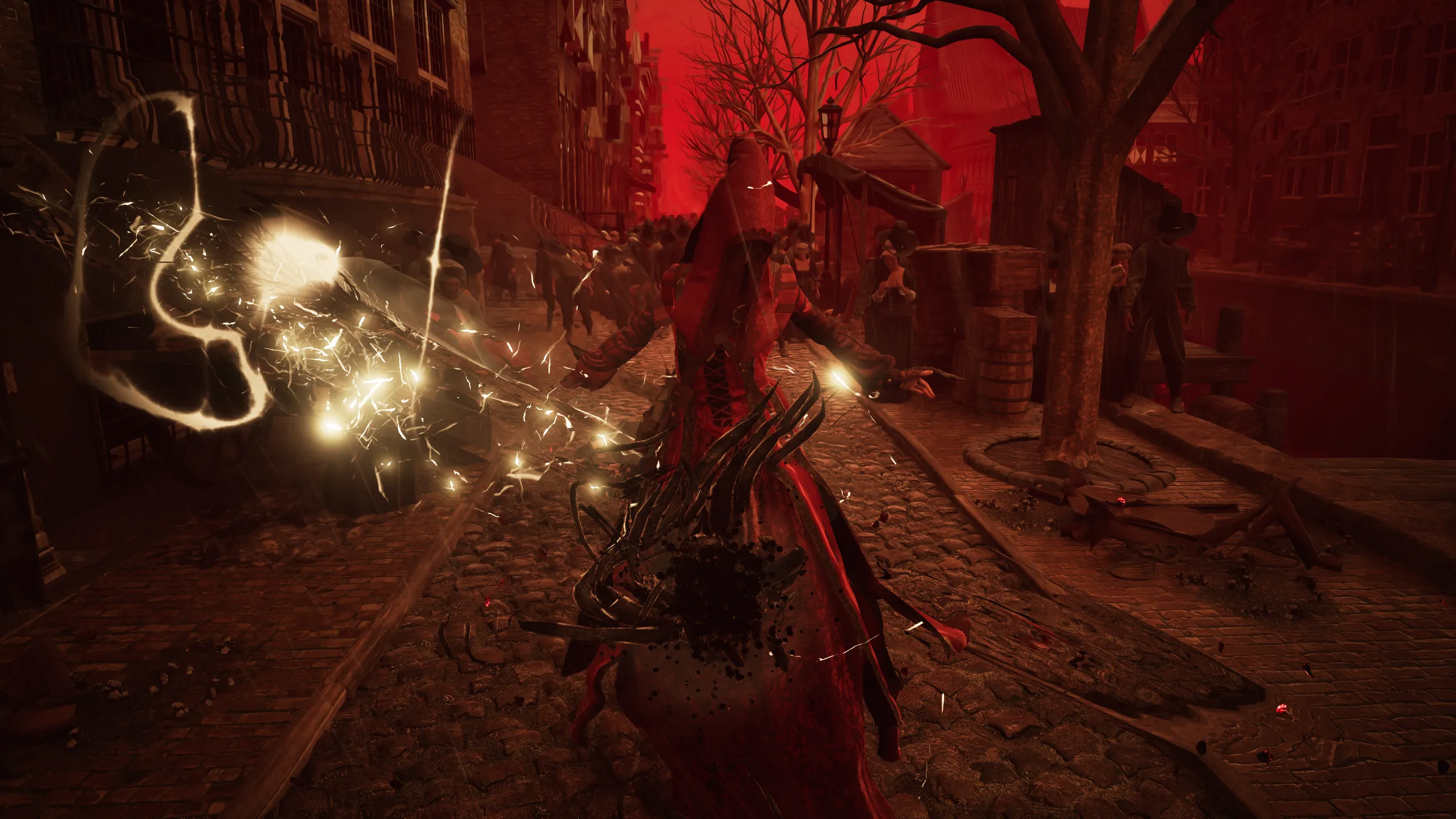

1666 Amsterdam is live in early access on PC via Steam and Epic, with a 10 to 15 hour campaign slice, a $30 price point, and visible rough edges that may make some players wait.
Image: analogstickgaming.com
1666 Amsterdam has finally opened its gates, but the pitch comes with a warning
1666 Amsterdam early access is live on PC, with Steam and the Epic Games Store carrying Panache Digital Games’ long-in-development action-adventure after its Gamescom Opening Night Live 2026 showing. GameRant reported the early access unlock for August 25, 2026, at 19:40 UTC, while Last Word on Gaming described it as live on August 26 following the Gamescom presentation, a difference that lines up with publication timing and global time zones rather than a clear contradiction.
The concrete offer is also clearer than the usual cinematic reveal beat. According to GameRant, the early access version is priced at $30 and includes roughly 10 to 15 hours of the core campaign, with access to the day/night investigation loop and core tracking mechanics. The Steam listing is live under 1666: Amsterdam, and the page title currently advertises a 10 percent discount, although storefront discounts can be temporary and should be checked at purchase.
That makes the 1666 Amsterdam launch a real buyer decision, not only a wishlist moment. The game carries the weight of Patrice Désilets’ name, a 15-year development history reported by Last Word on Gaming, and a concept that has been circling the medium since its earlier life as 1666. But PC Gamer’s launch-day hands-on headline cautioned that there is “still plenty that needs ironing out” before that writer would pay $30 for it. The provided excerpt does not list the specific problems, so we should not pretend to diagnose performance, combat tuning, animation, quest scripting, or AI from that source alone. The reliable takeaway is narrower and still important: at least one hands-on account frames this early access build as promising but visibly unfinished at its current price.
The build is selling a supernatural investigation loop, not a finished 1.0 campaign
Panache’s early access pitch, as reported across the launch coverage, centers on Noa Brooklyn, a witch operating inside a supernatural 17th-century Amsterdam. GamingBolt identifies her companion Aaron as a boy from the future trapped in a cat’s body, while Last Word on Gaming says Noa is accused of starting a plague and must avoid authorities while uncovering corruption in the city. Last Word spells the protagonist’s name as “Noa Booklyn,” while GamingBolt and the supplied public listing use “Noa Brooklyn,” so readers should be aware that coverage is not fully consistent on the spelling.
For players, the useful part is the structure. GameRant says early access includes full access to the day/night investigation cycle and core tracking mechanics. Its framing describes a single-player action-adventure where players investigate the city by day and hunt demonic entities by night. That gives the 1666 Amsterdam gameplay pitch a readable rhythm: casework, surveillance, intrusion, and confrontation, rather than an open-world checklist confirmed in detail.
Last Word on Gaming also reports that Noa is accompanied by a loyal cat companion and can use magic to control animals, sneak past enemies, and solve puzzles. The same outlet says players can choose between Noa and Aaron. The supplied public listing goes deeper, describing Aaron as a familiar who can enter small spaces, open doors, climb surfaces, and coerce NPCs to help Noa access restricted areas. Taken together, the early access build appears to be leaning on dual-perspective traversal and problem solving, with the cat role giving Panache a way to slow the pace, route the player through tight spaces, and turn urban interiors into stealth puzzles.
Combat sounds more tactical than brawler-driven, but polish will decide whether it sings
The action side of 1666 Amsterdam is pitched around tools rather than raw aggression. The supplied public listing describes a third-person action-adventure with exploration, investigation, environmental puzzles, dialogue choices, and supernatural abilities. It says Noa fights with a broomstick, dodges attacks, and uses spells such as petrification and levitation. It also describes environmental objects as combat tools and says intimidation can cause enemies to flee.
That is a good action-adventure blueprint on paper. A broomstick as a melee weapon gives combat a silhouette, while petrification and levitation imply crowd control rather than simple damage rotation. The Lux and Nux resource language in the supplied listing suggests a split between environmental magic and rarer combat magic, with Aaron able to convert between them and restore Nux through successful quick-time events. If that system is responsive, it could create a satisfying push and pull between Noa’s human vulnerability and her occult control of the space around her.
The risk, especially in early access, is feel. Games built around stealth, suspicion, companion routing, dialogue, and magic resources depend on clean feedback. A suspicion meter that alerts witch hunters, as described in the supplied listing, only works if players understand when they are exposed and why. A cat companion only works if transitions between bodies, spaces, and objectives do not feel like friction. PC Gamer’s broad launch-day caution about elements needing ironing out lands directly on that pressure point. 1666 Amsterdam can have the right ingredients and still need months of tuning before its encounters have the rhythm action-adventure players expect from a premium PC release.
The city is the promise, and early access is the test of whether it can hold together
Amsterdam is doing heavy narrative labor here. The setting is a supernatural interpretation of the 17th-century city, according to the supplied public listing, and Last Word on Gaming frames the story around plague accusations, authorities, and civic corruption. GamingBolt’s launch coverage adds the larger mythic language of witchcraft, ancient orders, the Originals, and Noa learning more about her mother and heritage, with the launch trailer suggesting her mother had a key role in the destiny ahead of her.
That mixture gives 1666 Amsterdam a different cadence from a straightforward monster-hunting action game. The day/night loop reported by GameRant positions the city as an investigative board in daylight and a hunting ground after dark. The suspicion system described in the supplied listing gives crowds and patrols a narrative function: Noa is not simply moving through streets, she is moving through accusation.
The most ambitious listing detail is that every building in the city is accessible, offering clues, power-ups, and puzzle challenges as players work out how to gain entry. That is the kind of claim that can define the entire game if it holds up, because accessible interiors change the pacing of urban adventure. They turn windows, doors, rooftops, alleys, and social spaces into level design. They also create a serious production burden. Interiors need layout logic, readable objectives, reward density, and enough variation to avoid becoming a collection of locked-room chores. Early access is where that promise will be stress-tested by players who search every corner and report where the illusion cracks.
Patrice Désilets’ 1666 Amsterdam arrives with unusually long baggage
The phrase Patrice Desilets 1666 Amsterdam still carries a charge because this project has been part of the industry’s unfinished-business file for years. The supplied public listing says 1666: Amsterdam is directed by Patrice Désilets, developed and published by Panache Digital Games, and was originally conceived as 1666 during Désilets’ time at THQ Montreal. It says the project was canceled in 2013 before being revived after he reacquired the intellectual property. GamingBolt’s coverage also points back to the game having once lost funding.
That history helps explain both the excitement and the caution around the early access launch. A game with this much myth around it is not arriving as a blank Steam page. It is arriving as a resurrected idea from a designer associated with big-budget historical action-adventure design, now being built through Panache and exposed to public feedback before 1.0. Last Word on Gaming reports that Panache is using early access to gather active player feedback, with players encouraged to share impressions in the official Panache Discord community.
Early access can be a smart match for a systemic adventure like this. If the game depends on suspicion rules, animal control, cat traversal, combat resources, and dense interiors, player behavior will reveal edge cases faster than a closed test. The tradeoff is that buyers are being asked to pay into the process while the process is still visible. That is acceptable for players who enjoy watching systems evolve. It is a harder sell for anyone coming to 1666 Amsterdam because they expect the finish, pacing, and cinematic confidence associated with the director’s earlier reputation.
Should you buy 1666 Amsterdam early access now or wait?
If you are deciding today, start with what is confirmed. 1666 Amsterdam early access is currently a PC release through Steam and Epic Games Store, according to Last Word on Gaming and WorthPlaying. GameRant reports a $30 early access price, roughly 10 to 15 hours of core campaign content, and access to the day/night investigation loop and tracking mechanics. The Steam page title indicates a 10 percent launch discount at the time captured in the provided source material. GameRant says Xbox and PlayStation versions are planned eventually, but no console release date has been revealed.
Jump in now if the strongest parts of the pitch are exactly what you want to test: supernatural investigation, a witch and cat partnership, stealth through suspicion, magical combat resources, and a city built around intrusion and secrets. You should also be comfortable with the basic early access bargain. Panache is asking for feedback, and Last Word on Gaming reports that the studio is directing players to its Discord community for that purpose. In that sense, buying now means accepting that your first experience may include unfinished edges in exchange for seeing the game while its systems are still being shaped.
Wait if you are price-sensitive, allergic to roughness, or mainly here for a polished narrative action-adventure campaign. PC Gamer’s hands-on headline is the clearest caution in the provided source set: its writer saw enough unfinished material to say they would not yet pay $30. Because the excerpt does not specify which systems are rough, the safest reading is broad rather than targeted. Do not assume the issue is only performance, only combat, or only presentation. Treat it as a general quality warning until fuller patch notes, player reports, or updated hands-on coverage make the state of the build clearer.
For now, 1666 Amsterdam Steam access is best suited to players who like early access as a front-row seat. The idea has atmosphere, a strong setup, and mechanics that could create tense, strange action-adventure pacing if they are tuned well. The question is whether you want to experience that tuning process in public, or wait for Panache to turn this long-haunted project into a steadier 1.0 release.