
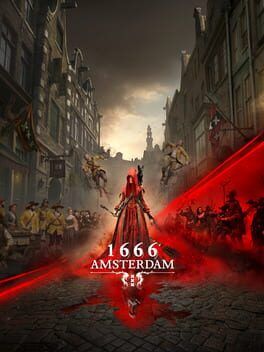

1666: Amsterdam is reportedly launching in Early Access on August 25 for PC, with hands-on previews pointing to an ambitious witchcraft stealth-action game still wrestling with combat, polish, and player trust.
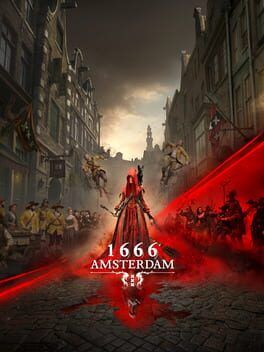
Image: IGDB
Store links: 1666: Amsterdam on Steam
August 25 gives Panache a narrow runway
1666: Amsterdam is now set to enter Early Access on August 25 for PC via Steam and the Epic Games Store, according to multiple August 10 reports citing developer and publisher Panache Digital Games. That is the concrete development at the center of the latest round of coverage: a project re-revealed at Summer Game Fest in June is moving from prologue demo to paid Early Access in the same summer window.
Eurogamer reports that Patrice Désilets said the Early Access version will cost $30 and contain about 10 hours of gameplay. The same report says that is less than half of what Panache wants the full game to offer. TheGamer also reports that Early Access buyers will receive the full game when it is ready, while noting that the Early Access release is PC-only.
There is one date wrinkle worth spelling out rather than ignoring. PCGamesN’s supplied article text says the 1666 Amsterdam Early Access release date is Tuesday, August 25, 2025, but that conflicts with its own publication date of August 10, 2026 and its surrounding context about a launch “this month.” Eurogamer, TheGamer, and Inven Global all published on August 10, 2026 and report an August 25 Early Access launch. The supported reading across the source set is August 25 in the current 2026 release cycle, with PCGamesN’s year appearing inconsistent inside the provided copy.
For players, the practical shape is clear even if the long-term schedule is not. 1666: Amsterdam Early Access is a PC launch through Steam and Epic, not a console launch. TheGamer reports that the game is coming to console at full launch, meaning anyone waiting on PlayStation or Xbox is looking beyond this August Early Access beat. No source material here provides PC requirements, a final console date, or a final 1.0 release date.
A long-revived project is finally becoming playable in public
The renewed attention around Patrice Désilets 1666 Amsterdam is not built only on a new trailer. It comes from the unusual weight of the game’s history. Eurogamer describes 1666: Amsterdam as returning to public view after a roughly 15-year conception involving legal battles, rewritten concepts, “secret publishers,” and finally an actual game. Game Informer similarly frames it as a long-awaited passion project that changed studios and became tied up in a years-long rights dispute between Désilets and Ubisoft.
That history follows Désilets because he is widely associated with the original Assassin’s Creed. The comparison is unavoidable in the source material, but it can also be misleading if it flattens what 1666: Amsterdam is trying to be. The game, as described across Eurogamer, TheGamer, Inven Global, and IGN listings, is a third-person action-adventure built around witchcraft, investigation, supernatural powers, and a city whose streets and canals are part of the promise.
The hook is Amsterdam itself. Eurogamer’s hands-on coverage says Désilets took press around the city to show places modeled in-game, including an “Anno 1666” plaque he saw during an Amsterdam layover in 2011, which Eurogamer says inspired the game. That kind of origin story is catnip for action-adventure fans because it ties the project to a specific place and a specific designer’s obsession. It also raises expectations. If the game is going to ask players to believe in supernatural Amsterdam as a living stage, the rhythm of movement, investigation, and confrontation has to carry more weight than the novelty of playing a witch with a broomstick.
The day and night structure gives 1666 its clearest identity yet
The newest gameplay feature trailer, highlighted by PCGamesN, TheGamer, Inven Global, Eurogamer, and IGN’s video listing, focuses on the day and night cycle. That structure is currently the strongest confirmed outline for the game’s stealth-action identity. During the day, Noa investigates Amsterdam and tries to identify the Originals, mysterious beings tied to the game’s supernatural conflict. At night, those investigations feed into combat encounters and Esbats, where Noa’s witch abilities come forward more openly.
PCGamesN reports that magic is socially dangerous during the day: Noa can use her powers, but they are unwelcome in Amsterdam and the crowd can quickly turn against her. That detail matters for how 1666: Amsterdam stealth action appears to be defining itself. The source material does not confirm a traditional stealth toolkit of crouch-walking, patrol cones, or hiding spots. Instead, the tension seems built around social exposure, investigation routes, and using powers carefully in public.
Aaron, Noa’s feline companion, is central to that loop. PCGamesN says Aaron can slip into places Noa cannot, and Inven Global says the trailer shows mechanics for controlling the cat Aaron while combining his abilities with Noa’s to uncover hidden truths. TheGamer describes Early Access as letting players explore the dual-protagonist system. Eurogamer’s release-date report lays out the broader supernatural exchange: Noa is playable in 1666, Aaron appears as a civilian in 1999, and by magic Aaron becomes Noa’s cat familiar in 1666 while Noa becomes Aaron’s cat familiar in 1999. A modern-day descendant of Noa then investigates their story from the present.
That is a lot of narrative machinery for an Early Access action-adventure game to carry. The June prologue, according to Eurogamer, raised questions about overlapping timelines and systems that were not especially well explained. The newer trailer and preview cycle appear to sharpen the picture: gather intelligence by day, exploit it by night, move between human and feline viewpoints, and let investigation shape combat preparation.
Hands-on previews point to atmosphere first, combat second
The first 1666 Amsterdam gameplay impressions are encouraging about concept and atmosphere, but much more cautious about feel. Eurogamer’s latest hands-on begins immediately after the prologue, with Noa back in 1666 and combat finally starting. The outlet reports that she fights by twirling a wooden broomstick and, later, casting spells. Early combat in that build is described as revolving around one attack, one defense, and a dodge. Eurogamer calls that core “very one-note,” even after spells such as petrify and levitate become available.
That is the key tension for an action-adventure game with Assassin’s Creed lineage in the conversation. The fantasy has snap: a crimson-clad witch crossing a haunted city, using a broom as a weapon, hunting enemies hiding in human shape. The combat rhythm, at least in Eurogamer’s build, is less assured. Encounters are described as wave-based and cinematically locked until cleared, with enemies appearing seemingly out of nowhere. Eurogamer says raising intimidation high enough can scare enemies away, a promising wrinkle, but also reports awkward attacks from all angles and a general scruffiness to the build.
TheGamer’s preview summary lands in a similar place. It says 1666: Amsterdam shows promise and offers a fresh take on witches and magic, but that its controls can feel limiting and frustrating. PCGamesN’s earlier demo reaction also sounded a warning: the outlet says it enjoyed the demo but found the voice acting rough and encountered performance issues, while also referring to lingering AI artwork concerns. IGN’s news listing separately notes that Panache apologized after AI assets were found in the prologue and said they would be replaced.
None of that makes the game a lost cause. It does frame Early Access as a real test rather than a marketing flourish. A stealth-action identity built on investigation, social risk, cat infiltration, and ritualized night combat needs friction in the right places. The reported friction right now is often in controls, combat basics, voice work, and performance, which are the areas that most directly affect moment-to-moment trust.
Amsterdam is the set-piece, but the systems must earn it
The most evocative hands-on detail may be movement. Eurogamer reports that after combat it experienced more exploration at pace, including flying on Noa’s broom across Amsterdam’s canals and barging through light obstacles. That image has the set-piece clarity of a good action-adventure pitch: low over water, crooked buildings rising around the player, witchcraft turning traversal into performance.
Game Informer’s preview adds a useful sense of staging. Marcus Stewart played an hour-long build in Amsterdam at the Amsterdam Dungeon, a local horror attraction, and describes the demo as beginning immediately after the free prologue. In that section, players control Noa Brooklyn, a young witch who has completed her initiation into the Zaindaris and has become a Collector. Game Informer reports that Noa’s purpose is to identify and eliminate the Originals, powerful beings able to assume human form and live among humans for long stretches of time.
Those details help explain why the day-night loop could work if Panache can tighten the action. By day, the city needs to read like a dense investigative space, full of routes, signs, overheard information, and places a cat can reach better than a person. By night, it needs to transform into an arena without losing the sense that this is still Amsterdam, not a series of disconnected fight rooms. The preview material suggests Panache is aiming for that transformation. It also suggests the studio has not yet shown enough to settle questions about encounter variety, AI behavior, and whether the city is explorable in a satisfying way beyond scripted demo slices.
That is where Early Access could help the game. Eurogamer reports that the Early Access timeframe seems fairly open-ended, with an internal end point in mind but flexibility if the community pushes for change. For a single-player narrative game, that is both opportunity and risk. Players can help identify where the broom flight sings, where investigation stalls, and where combat needs sharper timing. But they will also be playing a story-driven game before its final pacing, polish, and performance are locked.
Who should jump in, and who should wait
The case for buying 1666: Amsterdam Early Access on August 25 is strongest if you are drawn to ambitious action-adventure systems while they are still being formed. The confirmed package, according to Eurogamer’s report from Désilets, is about 10 hours at $30, with the full game planned to be larger. TheGamer reports that buying Early Access grants access to the full game whenever it is ready. Inven Global says the game is available for wishlisting on Steam and the Epic Games Store.
The case for waiting is equally clear. Console players have no Early Access option in the source material, and TheGamer says they will be waiting for the full launch. Players sensitive to rough performance, unfinished voice work, or experimental combat should also treat the previews as caution lights. PCGamesN reported performance issues in the demo. Eurogamer reported jank and limited combat in a later hands-on build. TheGamer called the controls limiting and frustrating in its preview summary.
The interesting part is that the warnings are not about a bland game. They are about an unruly one. 1666: Amsterdam has a vivid central image, a designer with a long-running attachment to the project, and a structure that could give witchcraft a tactical rhythm: investigate under daylight pressure, use Aaron to reach what Noa cannot, then enter the night with knowledge that changes who you face and what you can craft. The question for Early Access is whether those ideas can gain the timing, readability, and polish they need.
For now, the 1666 Amsterdam release date answer is August 25 for PC Early Access, with $30 pricing and roughly 10 hours reported by Eurogamer. The 1666 Amsterdam gameplay impressions answer is more complicated: strong atmosphere, striking movement, unusual dual-protagonist design, and a stealth-action premise that still has to prove its combat and controls can keep pace with the spell it is trying to cast.