
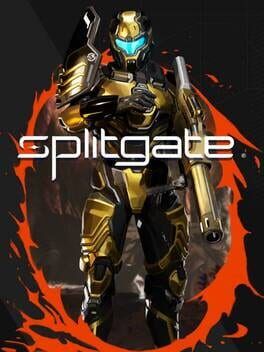
Splitgate studio 1047 Games is quietly spinning up an unannounced "movement shooter" built for fans of Titanfall and Black Ops 3. Here is what the tease tells us about the return of fast-mobility FPS games, how it differs from Splitgate, and whether there is really room in today’s market for a high-skill arena shooter.
When Ian Proulx closed out a Splitgate: Arena Reloaded Season 2 update by casually mentioning that a “small section of the team” was now working on a new movement shooter, it sounded less like a side note and more like a statement of intent. For 1047 Games, the studio that built its name on “Halo with portals,” the next pitch is stripped of gimmicks and aimed squarely at players who still dream about Titanfall wall-runs and Black Ops 3 thrust jumps.
According to Proulx, the project is explicitly a “movement shooter,” and if you are a fan of Titanfall or Call of Duty: Black Ops 3, they “would love to hear from you.” Playtest signups are already live, and early tests are planned to run under NDA. The game has no name, no platforms and no release window in public yet, but even this small teaser says a lot about where 1047 thinks the FPS market is heading.
The quiet comeback of the movement shooter
A decade ago, the big-budget shooter conversation was full of jetpacks, wall-runs and slide hops. Titanfall and Titanfall 2 pushed momentum-based platforming into mainstream FPS design. Call of Duty’s advanced movement era, peaking with Black Ops 3, let players chain thrust jumps, power slides and wall-runs in tiny competitive arenas.
That era burned fast and bright before publishers pivoted back to “boots on the ground” and then into battle royale and tactical trends. Titanfall 2 never got the commercial backing its fans felt it deserved, and advanced movement CoD became a scapegoat for parts of the player base. For a few years, the genre’s most visible shooters traded vertical chaos for slower pacing and broader mass appeal.
In the background though, demand for high-mobility FPS never really disappeared. Apex Legends kept a piece of Titanfall’s DNA alive. Arena shooters on PC, from indie experiments to projects like Splitgate, continued to iterate on fast time-to-skill movement. Even now, you can see the hunger in how often Titanfall 3 trends on social media on the back of rumors that never quite pan out.
1047’s new project sits in that context. Titanfall 3 still is not a thing you can actually buy, Black Ops has long since left jetpacks behind, and competitive players that liked the feeling of mastering a movement system are looking around for a new main game. 1047 is betting there is still meaningful space there.
Why Titanfall and Black Ops 3 are the touchstones
The specific name drops matter. Titanfall and Black Ops 3 represent two overlapping flavors of movement design that both resonate with today’s FPS crowd.
Titanfall’s appeal is about fluid, expressive traversal. Wall-running, double jumps, slides and ziplines stitched together across maps designed like parkour playgrounds. Good players did not just move faster, they rewrote the flow of every engagement. Even without titans on the field, Titanfall’s pilot movement system has taken on a legendary status.
Black Ops 3, by comparison, sat closer to the classic competitive arena format. Its thrust jumps and wall-runs operated inside a tight three-lane philosophy, with a strong focus on predictable sightlines and fast time-to-kill gunplay. Movement was a tool to out-position an enemy around familiar chokepoints rather than traverse huge spaces.
By citing both, 1047 is signaling that this new shooter is not just another floaty FPS with high jump height. The pitch is a high-skill, animation-tight, momentum-led system that rewards hours spent learning routes and tech. Coming from the team that already figured out how to make portals readable in ranked play, that is a deliberate way to court an audience that feels underserved.
Why 1047 wants playtesters this early
On the surface, recruiting playtesters before you have even publicly named your game might look like a simple marketing beat, but for 1047 it serves a few deeper purposes.
First, the studio needs to rebuild trust. Splitgate: Arena Reloaded, the successor to the original Splitgate, has had a rough run, with backlash around monetization, big design swings and layoffs that put the studio in the headlines for the wrong reasons. Proulx has been vocal about tightening budgets and even going without a salary at points. By inviting players into closed tests early, 1047 is telling its most dedicated community members that they get a direct line into how this new shooter feels.
Second, movement-heavy games live or die on feel, not feature lists. You cannot spreadsheet your way into a satisfying slide-cancel or wall-hop. You have to watch players break your mechanics in real time, then decide what to embrace and what to patch out. Early, NDA-bound playtests are how studios quietly iterate on jump curves, air control and aim assist without the pressure of public metas forming around half-baked systems.
Third, signaling for movement shooter fans now helps 1047 recruit a very specific slice of the FPS audience. Titanfall aficionados and advanced-movement CoD veterans have a common language and a history of sharing tech and routes. If you can get that crowd invested before launch, they become the culture carriers that teach everyone else why the game is worth taking seriously.
How this differs from Splitgate’s identity
Splitgate’s hook was always its portal mechanic. Underneath, it borrowed heavily from Halo style gunplay and map design, but the moment-to-moment decision making revolved around where you could place portals and how you could break sightlines. Movement certainly mattered, but in service of portal angles more than raw traversal mastery.
A pure movement shooter shifts that emphasis. Instead of portals redefining the geometry of the map, your player kit and the map geometry itself become the main toys. Wall-runs, thrust jumps, slide hops and possible grapples or air-dashes all suggest a design where the highest-skill expression comes from mastering how to cross the map without touching the ground.
That should also free 1047 from some of Splitgate’s readability problems. Spectating a top Splitgate match could be bewildering for newcomers, because the most important move a player made might happen through a portal off-screen from the observer camera. A Titanfall style shooter is still fast and complex, but the core verbs are easier to parse. You see someone run along a wall or chain slides, and your brain instantly understands what happened even if you do not know the exact inputs.
At the same time, this is a break from Splitgate’s brand of “one simple twist on a classic formula.” Portals were a pitch that fit into a short trailer. High-end movement is much harder to sell in a 30-second ad, which means 1047 will lean harder on word of mouth, clips, and the testimony of early testers who can explain why it feels good.
Is there really room for a mobility-heavy arena shooter in 2026?
The FPS market right now is brutally crowded, but its biggest hits tend to cluster in a few lanes. Tactical shooters like Valorant and Counter-Strike 2 dominate the esports space. Big service FPS games and battle royales like Call of Duty and Apex Legends soak up mainstream attention and cross-media marketing. Extraction shooters and survival hybrids are jockeying for the next breakout moment.
Within that landscape, the high-mobility arena shooter exists more as a nostalgia category than an active one. Quake Champions never truly broke out. Most advanced-movement CoD titles are years in the past. Titanfall 2 spikes in player count whenever it goes on sale, but does not have active support.
That absence cuts both ways. On one hand, publishers have convincing data that slower, more readable shooters are easier to scale across a wide audience. Fast, vertical, high-skill movement can create high skill gaps and raise the floor on mechanical competence, which scares off some casual players.
On the other hand, the players who like this style of FPS are extremely engaged, and they are starved. They memorize frame data, route tech and obscure momentum quirks, and they evangelize to anyone who will listen. That is the kind of audience that can sustain a mid-sized live game as long as the developer does not overscope.
This is where 1047 sits now: not a mega-publisher, but a studio with enough tech experience and network infrastructure from Splitgate to operate a competitive shooter if they can find their lane. A movement-focused game that keeps its expectations realistic and avoids chasing every mainstream trend has a shot at carving out a sustainable niche rather than trying to dethrone Call of Duty.
Lessons from Splitgate that could shape the new game
Splitgate’s trajectory offers a few obvious lessons that 1047 is likely to carry into its new project.
First, launch timing and messaging matter. Splitgate originally benefited from being a surprise hit that filled a downtime window in the release calendar. Its later relaunches ran into stronger competition and more skeptical players. If 1047 wants its movement shooter to land, it will need a clearer pitch about what it is and what it is not from day one.
Second, business model friction can kill goodwill in a niche scene even faster than in a mainstream one. Hardcore movement shooter players are often veterans of esports and old LAN eras, and they scrutinize monetization closely. Given the criticism aimed at Splitgate’s later monetization pivots, expect 1047 to be more cautious about how progression, cosmetics and competitive integrity intersect.
Third, long term success will depend on a sustainable content cadence. Titanfall 2 is beloved for its feel and maps, but its post-launch support slowed to a trickle as Respawn moved resources elsewhere. 1047’s talk about a “small team” on the new project while Splitgate remains the main focus suggests they are trying not to repeat that mistake in reverse. The trick will be avoiding a situation where both games feel under-resourced.
What this teaser actually tells us
For now, the public facts about 1047’s unannounced movement shooter are sparse. A small internal team is working on it in parallel with Splitgate: Arena Reloaded. Its core design priority is fast, expressive movement with clear inspiration from Titanfall and Black Ops 3. Early playtests are coming soon, and the studio wants movement-obsessed FPS players in the room from the beginning.
More interesting than any one detail is what the project represents: a sign that parts of the industry are willing to revisit an era that big publishers walked away from. If Respawn never ships Titanfall 3 and Call of Duty continues to stay grounded, it will fall to studios like 1047 to carry the torch for players who think an FPS should feel like a skill toy in your hands before it is anything else.
Whether this still-unnamed shooter can live up to that fantasy is an open question. But for the slice of the FPS community that spends more time labbing movement than tweaking recoil patterns, even the hint of a new contender is enough to start planning routes on maps that do not exist yet.