
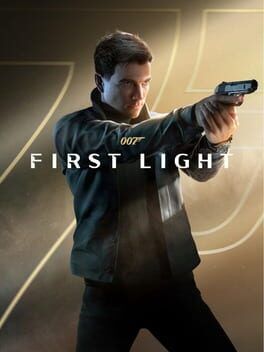

IO Interactive’s 007 First Light is making waves with its sharp‑jawed, cocky young James Bond. Here’s how the studio is using that divisive redesign, and the community’s reaction to it, to tell a modern origin story that still feels unmistakably Bond.
IO Interactive did not set out to make a safe James Bond.
From the moment 007 First Light was revealed, Irish actor Patrick Gibson’s sharply styled, faintly sneering take on a young Bond lit up timelines. Some fans were intrigued by the fresh face. Others went straight to calling him “smug,” “punchable,” or “not my Bond.”
According to IOI, that friction is not a problem to solve. It is the foundation of the game’s entire character pitch.
Bond, Rebooted: Why IOI Went Young
007 First Light is an origin story that drops Bond well before the tux fits perfectly. IO Interactive has talked about searching for a “sweet spot” where Bond is already competent but not yet the mythic 00 seen in decades of films. Instead of a grizzled veteran, we meet a soldier on the cusp of recruitment, still being forged by MI6 and the world of espionage he is stepping into.
That decision immediately separates First Light from IOI’s Hitman trilogy. Agent 47 arrives in those games as a fully formed murder savant, a vessel for clockwork stealth sandboxes. Young Bond has to be messier. He is a character whose defining traits are still under construction: a bruised orphan with anger issues, a taste for risk and a swagger that slightly outruns his actual experience.
For IOI, this is not just a lore tweak. It is a structural choice about how players will read every punch, quip and raised eyebrow. The team has put enormous effort into writing and rewriting this iteration of Bond, stressing that the game only works if the audience believes this kid could one day become 007.
The Smug Look That Launched A Thousand Replies
The first trailers and screenshots focused heavily on Gibson’s face. Razor‑sharp parting, immaculate tailoring, a micro‑smirk that sits somewhere between charming and insufferable. Very quickly, “smug” became the defining community adjective.
Fans dissected his expression frame by frame, comparing him to every big‑screen Bond. Some players complained he looked like a social‑media influencer in a suit, others argued that Bond has always been arrogant and that this was simply the rough‑cut version of that archetype. Social feeds and comment threads turned into miniature casting debates before anyone had touched a controller.
Instead of dodging that criticism, IOI leaned into it. Senior combat designer Tom Marcham has been very open about the reaction, arguing that every Bond actor has sparked this kind of discourse. The team’s stance is blunt: if nobody has any opinions on your Bond, you have probably made the dullest Bond imaginable.
That confidence reframes the “smugness” discourse. IOI does not see it as negative press so much as proof that their Bond has a personality sharp enough to cut through the noise. If the design is polarizing, at least it is not forgettable.
Unearned Confidence By Design
Narrative and cinematic director Martin Emborg has described First Light’s Bond as carrying “unearned confidence.” Where the classic, older 007 has already paid in blood and trauma for his reputation, this Bond believes he can walk into a room and own it simply because he has never truly failed.
On a story level, that means the cockiness we see in key art and trailers is not a static character flaw. It is an origin state. Emborg and the writing team frame Bond’s early arrogance as a mask covering deep‑seated anger, abandonment issues and volatility rooted in his upbringing as an orphan. Players are meant to catch glimpses of that mask slipping during combat and high‑stress moments.
This is where the community reaction almost reinforces the intended arc. If your first impression of this Bond is that he is a bit much, you are aligned with how many characters in the game will likely see him. Over time, the goal is for Gibson’s performance and IOI’s storytelling to earn back player trust, so that by the end of the campaign the same face reads less like a smug kid and more like a hardened yet still charismatic 00.
Balancing Classic Bond Swagger With A Modern Origin Tale
The tightrope IOI is walking is clear. 007 First Light must feel modern enough to justify revisiting Bond yet still carry the unmistakable DNA that defines the character across novels and films.
On one side of that balance is pure swagger. This Bond still moves with the easy grace and confidence fans expect, even if it is a touch overplayed in the early hours. He drinks, flirts and banters. He walks into a hostile room like it belongs to him. The visual language leans on classic silhouettes: the tailored suit, the pistol held low, the framed shot of a lone figure against metropolitan neon. The studio has studied the pan‑franchise iconography and transplanted it onto a younger frame.
On the other side is a contemporary origin‑story sensibility that leans into vulnerability and consequence. IOI talks about showing the cost of becoming 007 rather than assuming it. That means depicting not just glamorous espionage but the emotional and ethical compromises that shape Bond.
The combat design reflects that shift. Instead of a perfect, surgical killer, young Bond fights with more brawl than ballet. He can be reactive, scrappy and even lose his cool in ways an older, more composed 007 would not. The fiction and gameplay are aligned: the man is still learning where the line between bravado and recklessness lies.
Community Reaction As Creative Fuel
IOI’s willingness to treat controversy as a creative asset is one of the most interesting parts of 007 First Light’s rollout. Rather than smoothing out Bond’s design in response to early pushback, developers have consistently framed the discussion as validation.
There is a broader trend here. Major character‑driven franchises increasingly accept that a bold reinterpretation will spark discourse. For IOI, which stepped from the fairly expressionless Agent 47 to a much more emotive and talkative Bond, leaning into that noise is almost a statement of intent. You are meant to argue about this version of 007.
From a marketing perspective, the “smug Bond” debate keeps First Light in the conversation. From a narrative perspective, it is a litmus test for whether the studio can shift audience perception over the course of an entire game. If players end credits feeling protective of a character many of them disliked at first glance, IOI will have pulled off something rare in licensed games.
Redesigning An Icon Without Losing The Iconic
The real gamble in 007 First Light is not that James Bond looks young and smug. It is that IOI is asking players to invest in the journey that turns that kid into the legend.
So far, the studio’s messaging suggests a clear strategy. Start with a deliberately abrasive level of self‑belief. Expose the cracks through storytelling, performance and reactive gameplay. Then, over time, sand those edges down into the cool competence audiences recognize as 007. All while holding onto the core traits that make Bond feel like Bond: wit, style, danger and a touch of moral ambiguity.
Whether the community fully buys into that arc will only be clear once players can step into Gibson’s shoes and see where First Light leaves him. But the fact that people cannot stop talking about this new Bond, arguing over his face, speculating about his growth and debating whether he is worthy of the codename may be the surest sign that IO Interactive’s risky redesign is already doing exactly what it was meant to do.