
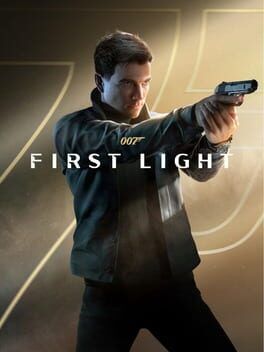
IO Interactive says the 007 First Light Switch 2 delay is about performance polish, while reports from Tokyo Game Show confirm a 30fps target and raise new questions about the port's rendering approach.
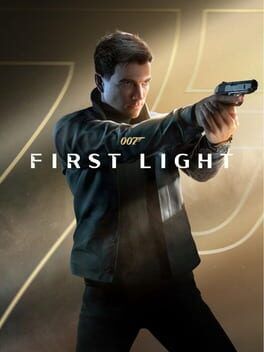
Image: IGDB
Store links: 007 First Light on Steam, 007 First Light: Gleaming Lighter on Steam, 007 First Light: Gleaming Pen on Steam
Bond’s Switch 2 mission has slipped again, and now the target is clearer
007 First Light on Nintendo Switch 2 is now scheduled for March 2027, and IO Interactive is targeting 30fps for the port at release. That is the concrete update Switch 2 players have been waiting for, and it cuts through some of the uncertainty around a version that has now been pushed back multiple times.
Nintendo Life reported that IO Interactive announced the delay through the game’s official X account, moving the Switch 2 version out of its previously planned summer 2026 window and into March 2027. The studio’s statement said the extra time will be used to polish the Nintendo Switch 2 performance of the game, with an exact date still to be communicated.
The 30fps detail comes from Tokyo Game Show reporting cited by My Nintendo News, which says IO Interactive revealed that 007 First Light on Nintendo Switch 2 will run at 30fps when it releases. Pocket Tactics had already reported from Gamescom that the Switch 2 version supported 1080p resolution in both docked and handheld modes at 30fps during its show-floor appearance.
For a James Bond game, that frame-rate target immediately shapes expectations. This is a platform where handheld play is part of the pitch, and a cinematic action-adventure lives or dies by whether chases, takedowns, aim adjustments, camera cuts, and scripted set-pieces feel controlled under pressure. A locked 30fps can work for that kind of game. A wobbly one can make Bond feel like he is fighting the hardware before he fights anyone on screen.
IO says the delay was not caused by one sudden technical disaster
The most useful clarification from IO Interactive is that the latest 007 First Light delay is not being described as the result of an unexpected single problem. Nintendo Everything, citing an Inven Global interview with IO Interactive, reported that the studio was asked directly whether the team had encountered an unexpected issue. IO’s answer was “Not really.”
According to the quoted comments published by Nintendo Everything, IO said the decision was made for the benefit of fans, that the development team had been pushing hard for a long time and needed a brief breather, and that marketing requests and “various other factors” contributed to the move to March 2027. The studio also said it wants fans to experience the game in its most polished form on Switch 2.
That explanation is less dramatic than a catastrophic porting failure, but it still points to a version that needs time. IO said Switch 2 porting work is “going very well,” according to Nintendo Everything’s excerpt, and described a visible jump between footage prepared in March and results seen during the summer while preparing a Gamescom presentation. The studio also said it was getting close to the final phase, including performance work and fine-tuning.
That sequence matters. The delay is being framed by IO as a combination of schedule, polish, team workload, marketing, and performance rather than a broken build. At the same time, performance polish is the public reason attached to the delay in the official statement reported by Nintendo Life. Players should read both together: the port may be progressing, but it is still being held back until IO is ready to ship it under the quality bar it has set for Switch 2.
The 30fps target is a promise of shape, not proof of stability
A confirmed 30fps target gives handheld players a realistic baseline for 007 First Light Switch 2, but it does not answer the harder question: how consistently the game will hold that target when the scene gets loud.
In action-adventure terms, 30fps is not automatically a problem. A Bond game can lean into cinematic pacing, deliberate infiltration, cover-to-cover movement, driving sequences, and staged spectacle without needing the twitch response of a competitive shooter. The issue is frame pacing and consistency. A clean 30fps presentation can feel composed, especially on a handheld screen. A 30fps target with dips during explosions, crowds, dense interiors, or quick camera movement can make aiming, stealth recoveries, and melee timing feel heavier than intended.
Pocket Tactics reported that the Gamescom Switch 2 demo supported 1080p in both docked and handheld modes at 30fps. That is encouraging as a public-facing snapshot, but a demo is not the full campaign, and IO’s own delay statement still names performance polish as the reason for more time. The useful reading is that IO has chosen its performance lane. It is not currently selling the Switch 2 version as a 60fps portable Bond showcase.
For handheld players, that sets the expectation plainly. If you are hoping for high frame-rate play, the sourced material does not support that expectation for Switch 2 at launch. If your priority is playing the James Bond game Switch 2 version portably with a cinematic 30fps target, the question becomes whether IO can keep that frame rate steady across the missions, set-pieces, and transitions that were not represented in short public demos.
The new rendering technique is the unresolved technical wild card
Nintendo Everything’s report frames IO’s Switch 2 discussion as covering a new rendering technique for the system, but the available reporting does not give players the information needed to judge it in detail. The technique has not been identified in the provided material by name, and there are no confirmed public figures here for internal resolution, reconstruction method, image-quality cost, or whether docked and handheld modes use different settings.
That lack of detail should temper expectations. A new rendering approach can be a practical way to keep a visually ambitious game inside a handheld power envelope. It can also introduce tradeoffs, especially around fine detail, motion clarity, distant geometry, shimmering, blur, or how cleanly the image holds together during fast camera movement. Without named technology and direct footage analysis, it would be premature to claim the technique will solve every concern or degrade the image.
What can be said is narrower and more useful. IO’s comments, as reported by Nintendo Everything, place the Switch 2 port near a final phase focused on performance and fine-tuning. Pocket Tactics’ Gamescom report says the version was already being shown at 1080p and 30fps in both docked and handheld modes. My Nintendo News says IO later confirmed the 30fps target at release. Taken together, the new rendering technique appears to be part of the port’s attempt to hit an acceptable Switch 2 presentation rather than evidence of a surprise 60fps mode.
That distinction matters because rendering tricks are often sold to players as magic. For 007 First Light, the more grounded expectation is that IO is using extra time and platform-specific rendering work to make the 30fps target viable across the full game. Until IO shows final Switch 2 footage, names the technique, or publishes mode-by-mode details, image quality remains one of the open questions around the port.
The delay also has a business rhythm, not only a technical one
IO’s explanation includes marketing requests, according to the Inven Global comments republished by Nintendo Everything. My Nintendo News speculated that this could be connected to other major holiday releases, naming Grand Theft Auto VI and The Legend of Zelda: Ocarina of Time as examples, but that part is an outlet interpretation rather than a confirmed IO reason.
The confirmed point is enough on its own: IO did not describe the Switch 2 delay as purely technical. The studio pointed to performance polish, team workload, marketing requests, and other factors. That mix is common for big releases, where a port’s launch window has to account for certification, visibility, retail planning, platform messaging, and the risk of releasing a version before it can withstand scrutiny.
There is also a perception cost. Nintendo Everything notes that this is technically the third delay overall for the Switch 2 version: the game was first pushed back on all systems, then the Nintendo Switch 2 version was delayed specifically to summer, and now the port is coming next March. Each delay raises the burden of proof. The longer Switch 2 owners wait, the less patience there will be for obvious stutter, compromised image quality, or a feature gap that was not communicated before launch.
At the same time, IO’s public stance is that the port is improving. The studio said, through the Nintendo Everything excerpt, that comparisons between March footage and summer results showed “so much progress.” The tension is clear: IO wants players to see a careful port, while players have every reason to ask why a version delayed this many times is still being talked about in terms of performance fine-tuning.
Practical guidance for Switch 2 players waiting on 007 First Light
Right now, the safest expectation for 007 First Light Switch 2 is a March 2027 release window, no exact date, a 30fps target, and a performance-polish period that is still ongoing. IO Interactive has not, in the supplied source material, announced a final day in March, a price, file size, physical cartridge details, upgrade path, or alternate performance modes.
If you plan to play primarily in handheld mode, the confirmed 1080p and 30fps Gamescom report from Pocket Tactics is the detail to watch, because it suggests IO is aiming for parity between portable and docked presentation at least at the level shown publicly. The final test will be whether the full release maintains that target in heavier scenes, not whether a controlled demo could present well on a show floor.
If you are deciding whether to wait, the honest answer depends on what you value. Waiting for the Switch 2 version makes sense if portable Bond is the draw and you are comfortable with a 30fps cinematic target. Waiting is riskier if you expect 60fps, if image clarity is your top concern, or if repeated delays have made you wary of late ports. In those cases, the next meaningful update should be final Switch 2 footage, direct performance analysis, or a technical breakdown from IO explaining the rendering technique.
The delay has at least given players a clearer frame for the conversation. IO Interactive 007 First Light on Switch 2 is no longer an undefined promise somewhere beyond summer. It is a March 2027 port aiming for 30fps, with IO saying the work is progressing and the remaining time is being spent on polish. For Bond, timing is everything. For this port, consistency will matter even more.