
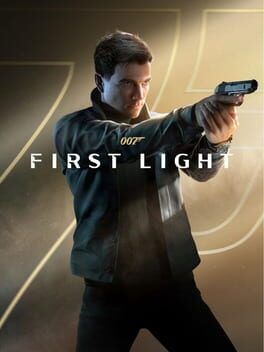
Hands-on impressions of 007: First Light suggest IO Interactive is folding its Hitman sandbox DNA into a more guided, cinematic origin story. Here is how stealth, action and a rookie Bond are shaping up from the preview cycle.
IO Interactive going from Hitman to James Bond always sounded like a perfect fit. After the first wave of hands-on previews for 007: First Light, the reality is more interesting than the fantasy of “Hitman but Bond.” What IO is actually building is a tightly authored stealth-action campaign that borrows the studio’s systemic instincts, yet keeps firm control over pacing to tell a focused Bond origin story.
A linear spine with Hitman muscles
Across the early missions shown to press, First Light repeatedly comes across as a linear third-person action game rather than an open-ended sandbox. Levels tend to funnel you through clear objectives, scripted beats and spectacular transitions, from an icy crash in Iceland to a training op in Malta and a Kensington infiltration.
Within that spine, you can see IO’s Hitman heritage flexing in small but important ways. The Malta training mission is structured as a replayable exercise, with multiple routes through a compound, optional side objectives and room to experiment with gadgets and non-lethal takedowns. The London party sequence lets you eavesdrop, case the venue and slip into back rooms using disguises, forged credentials or social engineering. These aren’t sprawling clockwork levels, but they invite you to probe their edges instead of just following a waypoint.
The key takeaway is that First Light is not trying to replicate Hitman’s systemic labyrinths. Instead, IO is lifting specific values from its sandbox work multiple approaches, improvisation in tight spaces, cause-and-effect reactions and injecting them into a campaign that cares much more about story rhythm than about player-authored chaos.
Stealth first, guns as the last word
If Hitman let you set the terms of engagement, First Light is more interested in teaching Bond when not to fight. Several previews highlight a “license to kill” framing that effectively restricts how and when you are encouraged to use lethal force. Gunplay exists and reportedly feels weighty and punchy, but systems and encounter design consistently nudge you toward stealth, gadgets and close-quarters takedowns.
In practice, that means slower, crouch-led approaches, leaning on Bond’s gadget watch to distract guards or reveal points of interest, and using cover to manage sightlines rather than turning every room into a shooting gallery. When things do go loud, the combat shifts into a fast, momentum-driven style, with quick transitions between melee strikes, finishers and short bursts of gunfire. It resembles IO’s growing comfort with more expressive third-person combat, yet is framed as a failure state you recover from, not the default way to play.
The most interesting design flourish in this space is the “blag” system. When you are spotted or challenged, Bond can sometimes talk his way out of immediate danger, buying a few more seconds to slip past or reset the encounter instead of tumbling straight into an alarm or firefight. It is a mechanic that puts social stealth right alongside physical stealth, and it suits a character who is supposed to be as dangerous with a lie as with a pistol.
Taken together, these systems suggest First Light wants to reclaim Bond as a spy rather than an action hero who happens to carry a silencer. Stealth is not just supported, it is the intended posture, with action reserved for spikes of escalation.
Cinematic control versus player agency
The biggest structural tension in First Light lies between IO’s instinct for sandbox play and the demands of a cinematic origin story. The preview slices are full of expensive set pieces and scripted moments, from aircraft emergencies to tightly choreographed chases. Eurogamer in particular notes sequences that verge on on-rails, where your role shifts toward executing responsive prompts and enjoying the spectacle rather than solving problems.
For players who came in expecting the fully systemic freedoms of Hitman, that can feel like a constraint. Enemy behaviors, patrols and level layouts are more straightforward, gadgets are approachable and the stealth model appears forgiving. The goal is readability and momentum over sim-like depth. You are rarely sitting back to plan elaborate chains of cause and effect. Instead, you are making quick decisions inside spaces that gently branch and then fold back into the main storyline.
From a design perspective, that is IO bending its style to meet the fantasy of playing through a Bond movie without becoming a corridor shooter. The tradeoff is that agency is local rather than global. You can choose how you get into the embassy, but you are still going to end up at the same rendezvous. Early impressions suggest that when the game hits its stride, the combination works the authored peaks feel more impactful because they are bookended by small pockets of player-driven stealth and improvisation.
The open question is longevity. Hitman’s puzzles thrive on replay. First Light seems more rewatchable than endlessly re-playable, with its strongest beats likely to be in the first run through a mission rather than the tenth.
A younger Bond as mechanical reset
Framing First Light around a rookie Bond is not just a narrative choice, it is also a mechanical one. By placing the character in MI6 training and early field work, IO gives itself permission to simplify, tutorialize and occasionally deny the player omnipotence. This Bond does not stroll into every room with absolute poise. He is learning, and the game structure reflects that.
In Iceland, you are more survivor than suave infiltrator, piecing together gear and intel in a hostile environment. In Malta, the training context justifies explicit guidance and scoring. The Kensington mission leans into social discomfort and the risk of overplaying your cover. These scenarios leverage Bond’s inexperience to explain why you might stumble during a blag, misread a security pattern or choose the wrong moment to pull a gun.
Previews are mixed on how this younger Bond lands as a character. Some writers feel he comes off as a little too eager, verbose and emotionally exposed, lacking the cold confidence that people associate with 007. From a design standpoint though, that rawness gives IO space to build arcs that are hard to sell with a fully formed superspy. Failure, doubt and reactive play make more sense when the protagonist is still building the persona players know.
The risk is that the performance and writing may not fully bridge the gap for fans who want to inhabit an effortlessly composed Bond from minute one. If the game’s systems are teaching restraint and subtlety while the character reads as overeager, there is a potential tonal dissonance. The success of this origin angle will likely hinge on whether the campaign convincingly tracks Bond’s evolution in parallel with the player’s mastery of stealth and social play.
What the preview cycle tells us about the final game
Taken as a whole, the first round of hands-on reports paints 007: First Light as a confident, polished stealth-action game that is more interested in being tightly directed than in being a sandbox toy box. It wears its Hitman DNA most clearly in its preference for infiltration over gunfights, its encouragement of multiple approaches within confined spaces and its appreciation for social stealth. Yet it deliberately stops short of giving players the same degree of systemic freedom, in favor of pacing, accessibility and narrative clarity.
On the stealth versus action spectrum, early impressions land First Light squarely on the stealth side, with action spikes used as punctuation rather than constant background noise. The young Bond framing looks like a smart structural tool for IO, even if not everyone is sold on this specific interpretation of the character. As a piece of game design, it gives the studio latitude to limit power, control the curve of competency and align the player’s learning process with Bond’s own.
If you approach First Light expecting the next evolution of Hitman’s sandbox, the constraints and scripted beats may feel like a step sideways. If you instead see it as IO applying its stealth and systems expertise to a curated spy thriller, the preview cycle suggests there is a focused, stylish and mechanically coherent take on Bond taking shape. The final verdict will rest on whether that careful balance between freedom and authorship holds across the full campaign and whether this inexperienced 007 grows into a version of the character that feels worth inhabiting across multiple missions, not just one polished demo.