
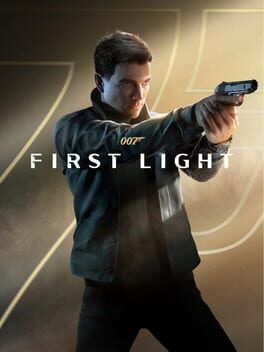
IO Interactive’s newly revealed PC requirements for 007: First Light focus squarely on scalable 1080p performance, even on older GPUs, while leaving 4K players to read between the lines about the studio’s priorities and engine optimization.
IO Interactive has finally lifted the lid on the PC system requirements for 007: First Light, and they paint a clear picture of what the studio is prioritizing ahead of launch. The targets are carefully framed around 1080p, with a strong emphasis on scalability and broad compatibility rather than chasing ultra-high-end 4K bragging rights.
The official 007: First Light PC specs
IOI has published two official targets for PC: a minimum spec for 1080p at 30 frames per second, and a recommended spec for 1080p at 60 frames per second. Both are built around modern CPUs but relatively accessible GPUs by 2025–2026 standards, which is consistent with the game’s cross-platform ambitions.
For the minimum 1080p / 30 fps profile, IO Interactive lists an Intel Core i5-9500K or AMD Ryzen 5 3500 paired with a GeForce GTX 1660 or Radeon RX 5700, along with 16 GB of system RAM, 8 GB of VRAM, and around 80 GB of storage space on a 64-bit copy of Windows 10 or 11. This configuration essentially targets mainstream gaming PCs from late last decade and early in this one, and it comfortably maps to the performance tier of GPUs that are now considered entry-level for new releases.
The recommended 1080p / 60 fps spec moves to an Intel Core i5-13500 or AMD Ryzen 5 7600, with a GeForce RTX 3060 Ti or Radeon RX 6700 XT. System memory rises to 32 GB and 12 GB of VRAM is advised, with the same 80 GB storage requirement. These parts sit in the midrange of current PC builds rather than in ultra-enthusiast territory, suggesting that IOI wants a large portion of the existing PC base to hit 60 fps at 1080p without exotic hardware.
At a glance, these are forgiving specs for a modern cinematic stealth-action game, especially given the studio’s reputation for dense, highly interactive sandboxes in the Hitman trilogy. The surprise is not that 007: First Light can run on a seven-year-old GPU class, but that IOI is explicitly drawing the line at 1080p in its official guidance.
Why IOI is targeting highly scalable 1080p performance
Taken together, the requirements highlight a few recurring priorities.
First, IOI appears to be designing First Light’s engine settings so the game scales smoothly across a very wide performance band. The choice of a GTX 1660 and RX 5700 tier for minimum makes a statement about how low the studio is willing to go while maintaining a cinematic baseline. Those GPUs are no longer premium, yet they were once the kind of cards a large chunk of the PC audience owned. By locking the minimum to 1080p at 30 fps, IOI can target filmic performance on aging hardware without promising miracles.
Second, the recommended target of 1080p / 60 fps at the RTX 3060 Ti and RX 6700 XT level makes sense for a cross-platform game that is also shipping on current consoles and a next-generation Switch. The consoles largely aim for 60 fps at either 1080p or a reconstructed 1440p. By anchoring PC guidance to a similar tier, IOI essentially tells PC players that the console experience and the recommended PC experience will be in the same ballpark, only with more flexibility on sliders, frame caps, and upscaling.
Third, these specs hint at substantial scalability in IOI’s Glacier engine. Hitman 3 was already known for handling complex lighting, crowds, and simulation on relatively modest GPUs while still accommodating higher-end cards with improved resolution and effects. First Light looks to be continuing that philosophy: guarantee solid performance on a big middle segment of the market, then let high-end hardware stretch its legs without being treated as the design baseline.
There is also a practical market angle. By mid-2020s standards, a sizable number of PC players are still gaming on 1080p monitors, with modest GPUs that line up neatly with IOI’s charts. Designing your minimum and recommended specs around that reality maximizes the addressable audience. For a licensed game like 007 that aims to reach beyond the usual stealth hardcore to Bond fans and more casual players, that reach matters.
The curious omission of 4K (and what it suggests)
The most talked-about detail in the spec sheet is not what is there, but what is missing. IOI provides no official breakdown for 1440p or 4K, and does not outline any higher refresh-rate targets above 60 fps. In an era when many big PC releases proudly showcase 4K/Ultra spec blocks topped with high-end RTX 40-series or Radeon RX 7000 cards, the absence is striking.
That omission signals a few likely things about IOI’s priorities and how it expects First Light to be played.
First, the studio appears focused on ensuring a consistent, console-aligned target at 1080p or close equivalents rather than optimizing the marketing message around 4K. 007: First Light is built as a cinematic stealth game where consistent frame times and animation quality matter more moment-to-moment than absolute pixel count. By staking its public performance claims on 30 and 60 fps at 1080p, IOI is emphasizing stability and responsiveness as the pillars of the experience.
Second, it suggests IOI is content to let 4K remain an enthusiast-space playground, handled by the usual combination of higher-end GPUs and upscaling tech rather than bespoke spec tables. Players with RTX 4070s, RX 7800 XTs, or better will almost certainly run the game at 4K with a mix of lowered settings, reconstruction techniques, and possibly frame generation, but IOI may feel that spelling out those combinations for every resolution is less valuable than concentrating messaging around the more popular 1080p tier.
Third, the lack of 4K data can indicate that the game’s visuals are tuned so that their most important leaps happen in settings quality, lighting, and post-processing, rather than raw resolution scaling. If the visual design leans heavily on cinematic depth of field, volumetrics, and material work similar to modern Hitman, then increasing resolution yields diminishing returns compared with turning on higher effects presets. In that context, IOI’s silence on 4K reads as a quiet statement that resolution is just one lever among many, not the defining one.
There is also a straightforward development reality to consider. Publishing clean, tested 4K spec recommendations means dedicating significant QA time to those combinations. With a simultaneous launch across PC, PS5, Xbox Series X|S, and new Nintendo hardware, IOI may be concentrating QA and optimization cycles on the performance window that most players will actually inhabit. That does not mean 4K will be poorly supported, only that it is not the headline concern for the day-one experience.
What it means for PC players ahead of launch
If you are on the lower or midrange end of the PC spectrum, the published requirements are encouraging. A system built around an older six-core CPU and a GPU in the GTX 1660 or RX 5700 family should meet IOI’s minimum, and with careful tweaking of shadows, reflections, and crowd density, there is reason to believe you may hit above 30 fps in many sequences. The studio’s track record with scalable stealth sandboxes suggests that the minimum spec is designed to be comfortable rather than painful.
For players with recommended-tier hardware, the message is that 1080p at 60 fps should be well within reach without surrendering visual features. IOI’s Hitman games have historically rewarded players who fine-tune graphics options, and it is reasonable to expect similar depth in First Light’s settings, including support for modern upscalers to push into higher resolutions.
High-end users who care about 1440p and 4K will need to do more early experimentation, but the lack of official 4K specs does not mean the game will fail to scale. More likely, it reflects a studio that is prioritizing smooth performance and console-parity targets over aspirational PC-only benchmarks. If IOI’s past work is any guide, Glacier should adapt well to faster GPUs once the community begins sharing benchmarks and optimal settings.
In practical terms, the PC spec sheet for 007: First Light tells a cohesive story. IO Interactive is treating scalability and broad accessibility as design pillars, locking in 1080p at cinematic frame rates as the common denominator. The absence of 4K guidance is less a red flag and more an indication that the studio is optimizing for what most players will actually use, leaving enthusiasts to leverage their hardware and the engine’s flexibility to push Bond’s next outing into higher resolutions on their own.