
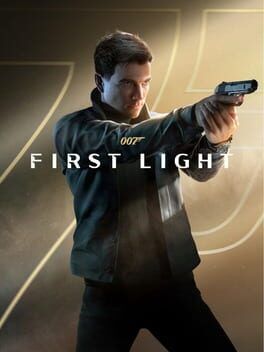
With surprisingly modest system requirements, Nvidia RTX features and IO Interactive’s stealth pedigree, 007: First Light is quietly shaping up to be one of 2026’s most PC‑friendly blockbuster stealth‑action games.
007: First Light might be James Bond’s origin story, but on PC it reads like a love letter to players who haven’t refreshed their rigs in years. IO Interactive has finally published the game’s system requirements, and they draw a clear target: accessible 1080p and 1440p play on hardware that would normally be sweating a 2026 blockbuster.
Modest specs for 1080p, even by 2026 standards
According to IO’s requirements, the minimum PC spec is pitched at 1080p and 30 frames per second. That build starts at an Intel Core i5‑9500K or Ryzen 5 3500, 16 GB of RAM, and a GPU in the ballpark of a GeForce GTX 1660 or Radeon RX 5700 with 8 GB of VRAM. Those cards date back to 2018–2019, which makes them roughly seven years old by the time First Light lands.
For a big cinematic Bond adventure, those numbers are striking mainly for what they are not. This is not a next‑gen exclusive that quietly assumes you are already on an RTX 40‑series card just to break 60 frames. If you are still on a six‑core CPU and a last‑gen mid‑range GPU, IO is explicitly telling you that 1080p at playable frame rates is on the table.
The recommended spec is where First Light’s PC ambitions really crystallize. To hit 1080p at 60 frames, IO suggests an Intel Core i5‑13500 or Ryzen 5 7600, 32 GB of RAM, and an RTX 3060 Ti or Radeon RX 6700 XT tier GPU with 12 GB of VRAM. That is still mid‑range territory in 2026, sitting comfortably under today’s enthusiast cards, yet it is positioned as the ideal way to play.
Read between the lines and you get a game built for the resolution sweet spots most PC players actually use. Steam hardware surveys continue to show 1080p as dominant with 1440p steadily rising. IO is meeting that audience where it lives rather than leaning on a 4K‑or‑bust vision that only a fraction of players can hit natively.
The curious absence of 4K specs
What the spec sheet does not include is almost as interesting as what it does. There is no official line for a “4K / ultra” build and no top‑end target that names a 4080 or 4090 class card. For a studio that likes to be precise about options and toggles, the omission stands out.
The lack of 4K guidance suggests that IO is not designing around native 4K as a baseline expectation on PC. Instead, it strongly hints at a world where 4K is expected to be handled via upscaling and smart rendering techniques rather than brute force. We know IO has partnered with Nvidia and is promising full GeForce RTX support at launch, so it makes sense that they would rather push players toward upscaled 4K via DLSS than publish intimidating native 4K requirements.
There is also a platform story buried here. First Light is launching across PC, PS5, Xbox Series X and S, ROG Ally handhelds and Nintendo’s next‑gen hardware. Every one of those platforms lives in the same performance envelope: 1080p or 1440p with reconstruction techniques pulling image quality up to 4K on big screens. Designing the PC version with the same assumptions keeps parity tight and lets IO channel its optimization effort into consistent frame pacing and responsiveness rather than chasing a “true 4K” bullet point.
IO’s likely optimization playbook
IO Interactive has already spent a console generation optimizing the Glacier engine for large, systemic stealth sandboxes in the Hitman trilogy. Those games delivered dense crowds, complex AI and layered lighting on relatively modest hardware while remaining impressively scalable on PC. First Light looks set to follow the same philosophy.
The early trailers show a wide mix of environments: drenched neon streets, moody interiors with heavy shadow work, windswept training facilities and more open combat spaces. There are hints of dynamic weather, volumetric fog and cinematic camera work during takedowns. Taken together, they point to a rendering approach that leans heavily on modern effects without blowing out GPU budgets.
Expect the same sort of slider‑rich options menu Hitman players are used to. IO’s past work suggests a clear separation between settings that hit the GPU hard, like global illumination quality and shadow resolution, and those that mostly eat CPU, like crowd density and NPC simulation range. Given the conservative GPU targets for 1080p, the team is likely banking on PC players tuning these to taste rather than brute forcing everything to ultra.
It also helps that First Light is a stealth‑first game rather than a twitch shooter. Consistent, reasonably high frame rates matter a lot, but the experience does not demand locked 240 Hz the way a competitive arena shooter might. That gives IO freedom to optimize for stable frame pacing, responsive input and high‑quality motion blur and camera work instead of chasing extreme refresh rates at all costs.
Nvidia RTX, DLSS and the path to comfortable 1440p
The Nvidia partnership might be the biggest reason 007: First Light looks so friendly to mid‑range PCs. IO has confirmed that the game will launch with RTX support and the latest DLSS features. That almost certainly means a combination of hardware‑accelerated ray‑traced effects and AI‑driven upscaling that can lift performance without sacrificing the moody Bond aesthetic.
In a stealth game built around contrast, ray‑traced lighting and reflections can do a lot of heavy lifting. Accurate bounce lighting can make dim spaces readable without flattening them, and ray‑traced reflections can sell the gloss of wet streets or polished marble without the artifacting you get from traditional screen‑space tricks. If IO offers granular toggles for these features, PC players will be able to dial in exactly how much ray tracing they want to pay for at their chosen resolution.
DLSS is where things get interesting for 1440p players. On a recommended‑tier GPU like an RTX 3060 Ti, native 1440p in a cinematic stealth game can be a stretch if you also want high settings and ray tracing. Run the game at a lower internal resolution and let DLSS reconstruct up to 1440p, though, and suddenly that same card can behave like something much more expensive. It is easy to imagine IO’s internal performance targets centering on that combination: 1440p output, high settings, ray‑traced lighting and DLSS carrying the load.
This is also where the missing 4K spec starts to make even more sense. If IO intends 4K displays to be served primarily by DLSS in a performance or balanced mode, then “native 4K” becomes a niche use case for ultra‑high‑end PCs rather than something the studio wants to promote as a mainstream target. Players with 40‑series monsters will still brute force it, of course, but the design of the port will be tuned around upscaled resolutions that map cleanly onto the listed mid‑range GPUs.
A stealth‑action showcase built for PC
The footage released so far positions 007: First Light as more than a simple Hitman reskin. There are glimpses of traversal that looks closer to a modern action‑adventure, shootouts that break out if your cover fails, and quieter, almost Thief‑like moments where the camera hugs Bond’s shoulder as he threads past guards and cameras. Coupled with IO’s comments about a “breathing” structure, it paints a picture of missions that can quietly expand or contract depending on how you approach them.
For PC specifically, that kind of design has a few important implications. The first is input flexibility. IO has routinely supported robust mouse and keyboard setups alongside controller play, and a stealth‑action hybrid like First Light should benefit enormously from precise mouse aiming for long‑range shots and tight camera control while sneaking.
The second is scalability. Large, semi‑open spaces call for engine systems that can fade in complexity based on what the player can actually see and hear. IO already has experience with that in the World of Assassination trilogy, where crowded plazas and multi‑story interiors were broken up into cleverly streamed chunks. Extending those techniques to First Light’s mix of set‑pieces and sandbox segments helps explain how the team can keep 1080p and 1440p requirements relatively modest.
Finally, there is the cinematic factor. A Bond game lives or dies on presentation. The reveal that Lenny Kravitz appears as black‑market dealer Bawma suggests IO is investing as heavily in performance capture and storytelling as it is in sandbox design. The PC version stands to be the best place to enjoy that work: sharper image quality at 1440p and above, higher frame rates, and the headroom to crank texture quality and anisotropic filtering without the memory pressure consoles face.
Positioned as a 2026 stealth staple
Put it all together and 007: First Light quietly looks like one of 2026’s safest bets for stealth‑action fans on PC. The hardware targets are realistic for people still on older GPUs, the recommended specs line up neatly with what many players have upgraded to, and the absence of 4K requirements is almost an admission that IO will lean hard on modern reconstruction and RTX tools rather than pure brute force.
If IO follows through with the kind of PC options and optimization it delivered for Hitman, First Light should be a fixture on mid‑range rigs for years. 1080p players on aging cards get a cinematic Bond fantasy that does not demand an immediate upgrade. 1440p players with a solid RTX card get a slick showcase of DLSS and ray‑traced stealth atmospherics. High‑end enthusiasts get a playground to max everything out and chase absurd frame rates.
James Bond is finally getting the big modern origin story he deserves, and on PC at least, IO Interactive seems determined to make sure that story runs just as well on real‑world hardware as it does in the trailers.