
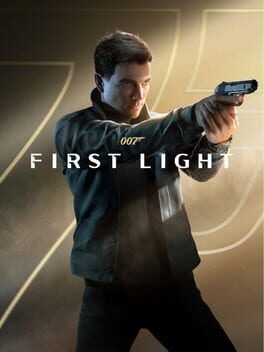

The new 007: First Light trailer finally lifts the curtain on Lenny Kravitz’s villain Bawma. Here’s what his Pirate King persona suggests about IO Interactive’s tone, mission design, and how the studio plans to evolve its Hitman formula for Bond’s origin story on Switch 2 and other platforms in 2026.
IO Interactive has spent years quietly building its James Bond debut, but the new 007: First Light trailer is the first time the game has a face for its threat. That face happens to belong to Lenny Kravitz, stepping into his first major video game role as Bawma, a self‑made Pirate King who rules a sprawling black‑market empire.
On the surface it is another celebrity casting moment at The Game Awards. Look a little closer, though, and Bawma’s introduction says a lot about the tone IOI is chasing for this Bond origin story and how it might build on the studio’s Hitman strengths when 007: First Light hits Switch 2 and other platforms on March 27, 2026.
Bawma, the Pirate King of Aleph
Across Nintendo Life, MonsterVine and other outlets, IOI is framing Bawma as “the largest black‑market dealer in the Western Hemisphere,” a charismatic but volatile kingpin who built his “Kingdom of Aleph” from nothing. The backstory painted in the MonsterVine breakdown has him starting as a teenage pirate scavenging a Mauritanian ship graveyard, before clawing his way up into the kind of globe‑spanning fixer only a young Bond could be thrown at.
The trailer leans hard into that duality. Kravitz delivers a silky, measured monologue over shots of neon‑soaked docks and opulent interiors, the kind of imagery that blends classic Bond exoticism with IOI’s taste for grounded spaces. Bawma oozes charm and taste, surrounded by dancers and lieutenants, but the edit keeps cutting back to quick flashes of violence and humiliation. One of the standout moments has him smiling as he talks about “feeding Bond to the girls,” a line that lands halfway between playful and predatory.
It is a type of larger‑than‑life villain that feels closer to the series’ pulpier roots than the grounded Craig‑era films. At the same time, the Pirate King angle and Aleph’s black‑market sprawl feel ripped from modern headlines about privatized violence and stateless power brokers. That mix of heightened theatrics and modern ruthlessness is exactly the sweet spot IOI carved out with its best Hitman levels.
A villain built for IOI‑style sandboxes
Even without a full mission walkthrough, Bawma’s setup practically screams IOI sandbox design. In Hitman, the best targets are social gravity wells who pull the whole level around them. Bawma is framed in that same mold:
Aleph reads like a hub location more than a one‑off backdrop. The language around his “Kingdom” and the Western‑hemisphere black‑market suggests interlocking operations in ports, free‑trade zones and offshore enclaves rather than a single lair. That is fertile ground for IOI to carve out multiple playgrounds: a labyrinthine ship graveyard echoing his origin, a decadent casino built on laundered money, a dockyard masquerading as a humanitarian aid depot.
Kravitz’s performance also hints at a villain who is volatile and vain, which IOI has historically turned into systems. Hitman’s aristocrats and warlords had predictable routines masking explosive mood swings. You could exploit a temper, a superstition or a lust for spectacle to engineer the perfect hit. Bawma’s blend of charisma and menace suggests mission stories where Bond infiltrates as a trusted fixer or entertainer, only to flip the table once he is close enough.
The “feeding Bond to the girls” line might be pure trailer flourish, but it reads like a teaser for an audience‑driven execution scenario, reminiscent of Hitman’s fashion‑show catwalk or Miami race track. Toss a younger, less polished Bond into that kind of arena and you can imagine sequences that start as social stealth before collapsing into improvised survival.
Reading the tone: pulpy, stylish and a bit messy
Fan reactions have been mixed. Some commenters are excited to see a musician of Kravitz’s stature play against type as a Bond villain, others think the performance looks too slick or too “American” for their mental image of the series. That friction is actually useful for reading IOI’s tone.
First Light clearly is not chasing a dour, spy‑drama realism. The Pirate King branding, the flamboyant wardrobe and the theatrical monologue all signal a return to pulpy, colourful Bond, only filtered through IOI’s slightly sardonic style. This is the studio that made an ice‑cold contract killer feel playful through environmental storytelling and absurd kill opportunities. Giving them a villain who is self‑mythologizing and performative opens the door to missions where the theatrics are the point.
At the same time, the origin‑story framing and MI6 mentorship setup described in MonsterVine’s piece suggest that Bond himself will not yet be the unshakeable super‑spy. A young, impulsive agent thrown at a self‑made kingpin who has a whole city wrapped around his finger is a recipe for failure, betrayal and messy improvisation. Expect more scenarios where Bond is outplayed in the opening act, forced into desperate escapes and uneasy alliances rather than gliding through every encounter.
That is tonally different from Agent 47’s almost supernatural competence. IOI can use Bawma’s dominance in Aleph to keep reminding players that this Bond is still earning the number. When you slip during a mission, it will feel like Bawma’s world closing in, not just a fail state.
From Hitman to Bond: what the trailer hints at in mission structure
IOI has openly described 007: First Light as its most ambitious cinematic story since Hitman, and the Bawma trailer backs that up. What is interesting is how many shots echo the studio’s existing design language.
Aleph itself looks layered. Wide exterior vistas are intercut with tight interior spaces, suggesting levels stitched from multiple vertical tiers: crowded streets at ground level, private clubs and offices above, and clandestine docks or server rooms hidden below. That riff on the classic Hitman triptych of public, restricted and secret zones seems like a natural fit for a spy story.
The cinematography foregrounds entrances and exits: stairwells behind Bawma’s throne, catwalks ringing the room where dancers surround him, skiffs moving in and out of the harbor. Those environmental details are exactly what IOI usually highlights in cutscenes to set up future infiltration routes and escape paths.
Then there is the focus on interpersonal leverage. The trailer makes Bawma a social spider at the center of the web, surrounded by lieutenants, bodyguards and “girls” who double as both entourage and teeth. IOI’s mission stories thrive on exploiting those relationships: poisoning the drink prepared by a favourite bartender, sabotaging the tech rig running a narcissistic warlord’s big show, or turning a trusted confidant into an unwitting weapon.
For Bond, that likely translates into fewer anonymous disguises and more identity‑driven covers. Where Agent 47 could be anyone, Bond might more often pose as a named MI6 asset, a rival dealer or an invited guest, with dialogue and choices reflecting that persona. Bawma’s paranoia and ego provide friction in those social spaces, giving IOI ample chance to gate progress behind clever observation rather than pure costume changes.
A Bond that has to earn his confidence
The official summary for 007: First Light describes a young, “sometimes reckless” recruit under the eye of MI6 veteran John Greenway. Bawma feels designed as the perfect crucible for that arc.
Origin stories rise and fall on their antagonist. If the villain is too weak, the hero’s growth feels unearned. If they are too strong, the story collapses into misery. Bawma’s rise from ship‑graveyard pirate to Aleph’s Pirate King is intentionally parallel to Bond’s journey from raw recruit to 00. He is what Bond could become if he pointed his talent and ruthlessness in a different direction.
IOI can turn that mirroring into mission structure. Early encounters with Bawma might end in failure or uneasy stalemates, forcing Bond into the kind of spycraft that Hitman never needed: cultivating informants, navigating grey alliances and choosing who to burn. Later missions could revisit the same spaces in Aleph with the power dynamic flipped, letting players feel how far Bond has come as routes open and Bawma’s grip loosens.
There is also room for quieter character work. A charismatic, talkative villain is a chance to give Bond someone to bounce off who is not a handler in his ear. If IOI leans into dialogue and interrogation systems between major set pieces, Bawma could become less of a distant objective and more of a persistent presence, taunting you over radios, appearing on screens, or even walking through missions in person.
How it plays on Switch 2 and other platforms
From a technical angle, the trailer footage was presented without platform labels, but every press release and recap pegs 007: First Light as a March 27, 2026 launch across PS5, Xbox Series X|S, PC and Nintendo’s next‑gen Switch 2. That cross‑gen spread is important, because IOI’s modern sandboxes are CPU‑heavy and AI‑dense rather than simply GPU showpieces.
Hitman’s World of Assassination trilogy showed how IOI can scale its systems across a wide hardware range without gutting what makes the levels sing. Crowds, patrol routes and simulated routines matter more than ray‑traced reflections. If Switch 2 really is closer in power to current home consoles, Aleph’s dense markets and packed harbor clubs should survive the jump, even if the image is softer and some physics flourishes are pared back.
For Bond, portability pairs well with replayability. Hitman levels rewarded experimenting with different approaches and mission stories; Bawma’s domain looks cut from the same cloth. On Switch 2 you can imagine chipping away at a complex Aleph mission on commutes, trying a stealthy infiltration one run and a loud, gadget‑heavy approach the next.
As long as IOI keeps its systemic heart intact across all versions, the tone and structure implied by Bawma’s reveal should read the same whether you are playing on a high‑end PC or Nintendo’s new handheld hybrid.
A promising first villain for a new 007
With just a few minutes of footage, Bawma is already doing heavy lifting for 007: First Light. He sells the game’s intent to blend classic Bond spectacle with IOI’s clockwork sandboxes, and he gives the origin‑story pitch a concrete antagonist who can believably shape Bond’s rise.
Lenny Kravitz’s casting will continue to spark debate, but that may end up being a strength. Bond villains are supposed to be a little outrageous, and IOI has proven it knows how to convert outsized personalities into interactive systems.
If Aleph and its Pirate King deliver the kind of dense, reactive spaces hinted at in this trailer, 007: First Light could be the moment IOI fuses its assassination‑sim heritage with a more cinematic, character‑driven spy thriller when it launches on Switch 2 and other platforms in 2026.