
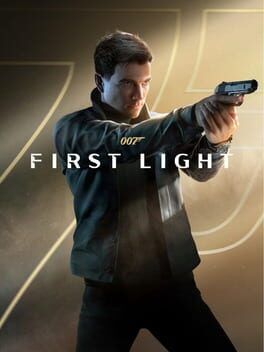
IO Interactive once considered a broader double-O ensemble structure for 007 First Light before reshaping the idea into a sharper James Bond origin story built around survival, guilt, and maturity.
Image: IGDB
Store links: 007 First Light on Steam, 007 First Light: Gleaming Lighter on Steam, 007 First Light: Gleaming Pen on Steam
IO’s Bond almost carried a bigger team
IO Interactive’s 007 First Light was once pitched with a broader ensemble shape, according to lead writer Michael Vogt, who told Eurogamer that the studio had toyed with an early version built around multiple double-O agents working together. The finished game instead narrows around James Bond, using an early team dynamic as a setup before violently stripping it away.
That is the concrete development behind the latest James Bond game interview circuit: 007 First Light did not begin and end as a team-spy adventure in the Mission: Impossible mold. Vogt’s comments, reported by Eurogamer and picked up by Rock Paper Shotgun, describe a design and story path where Bond’s fellow agents were once a larger structural presence rather than a temporary emotional foundation.
There is an important distinction here. IO has not said the game stopped being an origin story. In a separate TechRadar interview excerpt, game director Hakan Abrak said 007 First Light was “always” planned as an origin story and that IO wanted “to take that risk and introduce a fresh Bond for the gamers.” The change Vogt described is therefore not a pivot away from Bond’s beginnings, but a pivot in how those beginnings are dramatized. IO appears to have moved from a version where Bond’s growth might have unfolded alongside peers to a version where his elevation depends on being left alone.
The early camaraderie is a deliberate misdirection
Eurogamer’s account of First Light identifies the traces of that earlier ensemble idea in the game’s opening stretch. MI6 restarts the double-O programme and recruits Bond alongside other young candidates. Bond goes to Malta, builds relationships with the trainees, and shares a London flat with Cressida and Monroe, two figures Eurogamer says he forms a particularly close bond with.
That early rhythm matters because it does not play like a throwaway prologue. It gives the player a sense of institutional momentum: a class of agents, friendly rivalry, shared living space, banter, and the fantasy of a new double-O generation coming online together. Eurogamer’s writer said those agent friends brought warmth and fun, while Rock Paper Shotgun noted that the training montage had gone down well with many who played it.
Vogt’s explanation reframes that warmth as a controlled narrative trick. “During the training sequence, we make a false promise,” he told Eurogamer. “Basically we’re saying this is going to be an ensemble piece, all the double-Os working together, as they do in Slovakia.” The phrasing is blunt: IO knew the early game was teaching the player to expect one kind of spy story, then used the Slovakia sequence to break that expectation.
The spoiler, as both Eurogamer and Rock Paper Shotgun warn, is that most of those agents die. Bond survives an explosion he might have died in, becoming, as Vogt put it, “the last man standing.” In the final version, the ensemble idea survives as an opening movement, then becomes the reason Bond’s solo path carries weight.
The origin story is built around loss, not recruitment
The abandoned ensemble concept reveals something sharper about IO’s final 007 First Light story. This is not only a tale about Bond earning status inside MI6. It is a story about a young operative learning that the double-O fantasy has a body count.
Vogt told Eurogamer that the change served the moment where Bond’s life shifts from “fun and games” to a harsher reality. After the explosion, he said, Bond understands M’s warning that life expectancy is very short. Vogt also pointed to maturity and “maybe the survivor’s guilt” of being the one who made it.
That language gives IO’s origin-story approach a clearer dramatic spine. In a full ensemble structure, Bond’s peers could have functioned as ongoing mirrors: the charming rival, the reckless operator, the disciplined agent, the friend who challenges him. In the final structure, their absence becomes the mirror. Bond’s promotion is not framed as a clean triumph. It is contaminated by chance, grief, and responsibility.
For a James Bond game, that is a useful answer to a familiar problem. Bond begins as a finished icon in many adaptations: confident, lethal, sexually assured, and already mythic. IO’s version, according to the interviews, is interested in the cost of that formation. The studio uses the early team dynamic to create a Bond who does not simply decide to become the top agent. He survives into the role, with all the guilt and narrative pressure that survival implies.
IO shifted away from a straighter spy thriller tone
Eurogamer’s interview also places the ensemble decision inside a broader tonal evolution. Vogt said IO “probably shifted the genre ever so slightly from more of a straight spy thriller to something that was a little bit more action-adventure,” while dialing up comedy and charm. Eurogamer connects the earlier, more serious mindset to the game’s development after the Daniel Craig era, which ended in 2021 with No Time to Die and its sad ending.
That context is especially relevant for an IO Interactive James Bond game because the studio’s recent identity was forged through Hitman’s elaborate sandboxes, deadpan humor, and clockwork assassination spaces. A solemn, team-focused spy thriller could have leaned into procedural tension and ensemble operations. The final 007 First Light, as described by Vogt, seems to use a darker inciting wound while still moving toward a more broadly action-adventure register.
That balance explains why the early agents matter even if they do not remain the game’s format. They give First Light a playful opening tempo: young spies, training exercises, social friction, and the sense that Bond is one talented candidate among several. Then the explosion changes the rhythm. The story can still chase globe-trotting set-pieces and charm, but the player has been shown that the adventure mode has consequences.
Rock Paper Shotgun’s write-up notes that its reviewer was generally positive on Bond’s relationship with the other double-Os, while also observing the game’s breakneck pace. That combination fits the structure Vogt describes. The relationships have to land quickly because the story is designed to take them away quickly.
A team-Bond game would have changed the action rhythm
IO has not described the abandoned ensemble pitch as a gameplay mode, a co-op feature, or a cut playable-character system in the provided interviews. The confirmed fact is narrower: Vogt said the first pitch toyed with “the idea of making it an ensemble piece,” with different agents working together. Anything beyond that, including speculation about multiple playable agents or squad mechanics, remains unannounced and unsupported by the cited material.
Still, narratively, the difference is substantial. A persistent double-O cast would naturally pull scenes toward coordination: who breaches, who distracts, who drives, who lies, who takes the shot. A solo Bond origin story pulls those same pressures inward. Bond has to become the operator who can do all of it, or at least convince MI6 that he can.
For pacing, that choice tightens the camera. The early ensemble gives the story texture, then the later isolation turns every set-piece into a test of Bond’s formation. In action-adventure terms, it changes the function of spectacle. The Slovakia incident is not simply escalation. It is the cut between act one and the harder film that follows.
That is where IO’s final approach sounds most deliberate. The studio keeps enough of the ensemble to make Bond feel socially and professionally situated, then removes it before the game can become a team drama. The result is an origin story that uses camaraderie as fuel rather than format.
Confirmed details, open questions, and player guidance
Based on the supplied sources, the confirmed story is this: Michael Vogt told Eurogamer that IO Interactive’s very first pitch considered an ensemble version of 007 First Light built around multiple double-O agents working together. He said the final game uses its training sequence to make a “false promise” of that structure, then kills most of the agents in an explosion that leaves Bond as the surviving top agent. Vogt could not remember exactly when the approach changed, citing the age of the original pitch, but he did explain the reason in terms of Bond’s maturation, harsher reality, and possible survivor’s guilt.
Also confirmed through the TechRadar excerpt is IO’s public position that 007 First Light was always intended as an origin story. That helps resolve the apparent tension. The ensemble idea was not necessarily a different premise for the entire project. It was an alternate way to stage Bond’s beginning.
What remains unconfirmed is the practical scope of that old pitch. The sources do not establish whether IO built missions around multiple playable agents, whether any systems were prototyped, whether co-op was ever considered, or whether Cressida, Monroe, and the other trainees changed significantly during production. Vogt’s comments are about story structure and tone, not a feature list.
For players, the guidance is simple: if you are coming to 007 First Light expecting Hitman with a Bond skin, the interviews point elsewhere. IO’s Bond is framed as action-adventure, with charm and comedy dialed up from an earlier, straighter spy-thriller conception. If you are interested in the 007 First Light story specifically, the abandoned ensemble concept makes the opening chapters more important, because they are not mere onboarding. They are the emotional machinery that turns a promising recruit into a solitary Bond.